Best Shoes for Sciatica: What to Look For
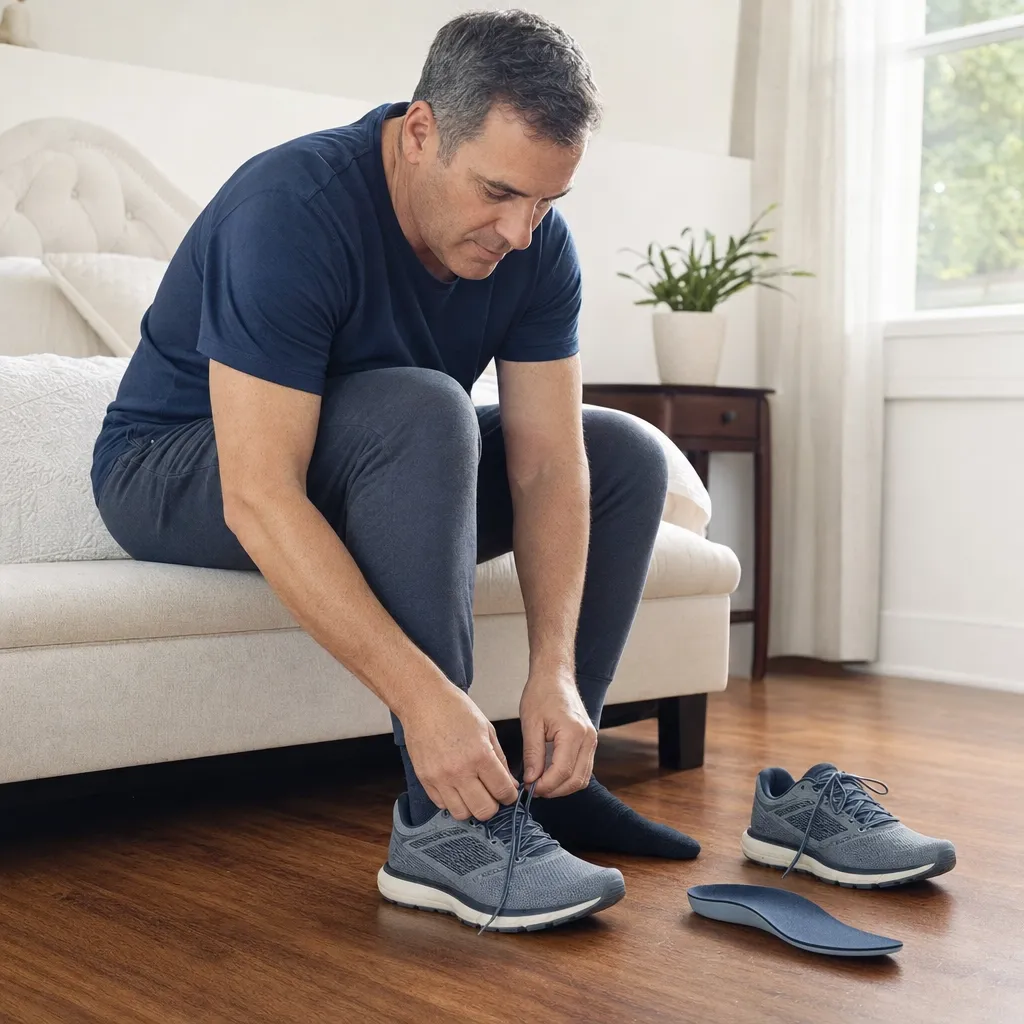
The best shoes for sciatica are not a specific brand. They are shoes with the right features: firm cushioning to absorb shock, arch support that matches your foot, a low and stable heel, a heel counter that holds your foot steady, a sole that supports your step but still bends at the toes, a roomy toe box, and a light, easy-on build. The right pair will not cure sciatica, because sciatica comes from a nerve problem in your spine, not your feet. What good shoes do is take some of the pounding and posture strain out of every step, so standing and walking hurt less while you treat the real cause.
- Shoes ease symptoms, they do not cure sciatica. The pain comes from a pinched or irritated sciatic nerve in your lower spine, so footwear is a comfort and support tool, not a treatment.
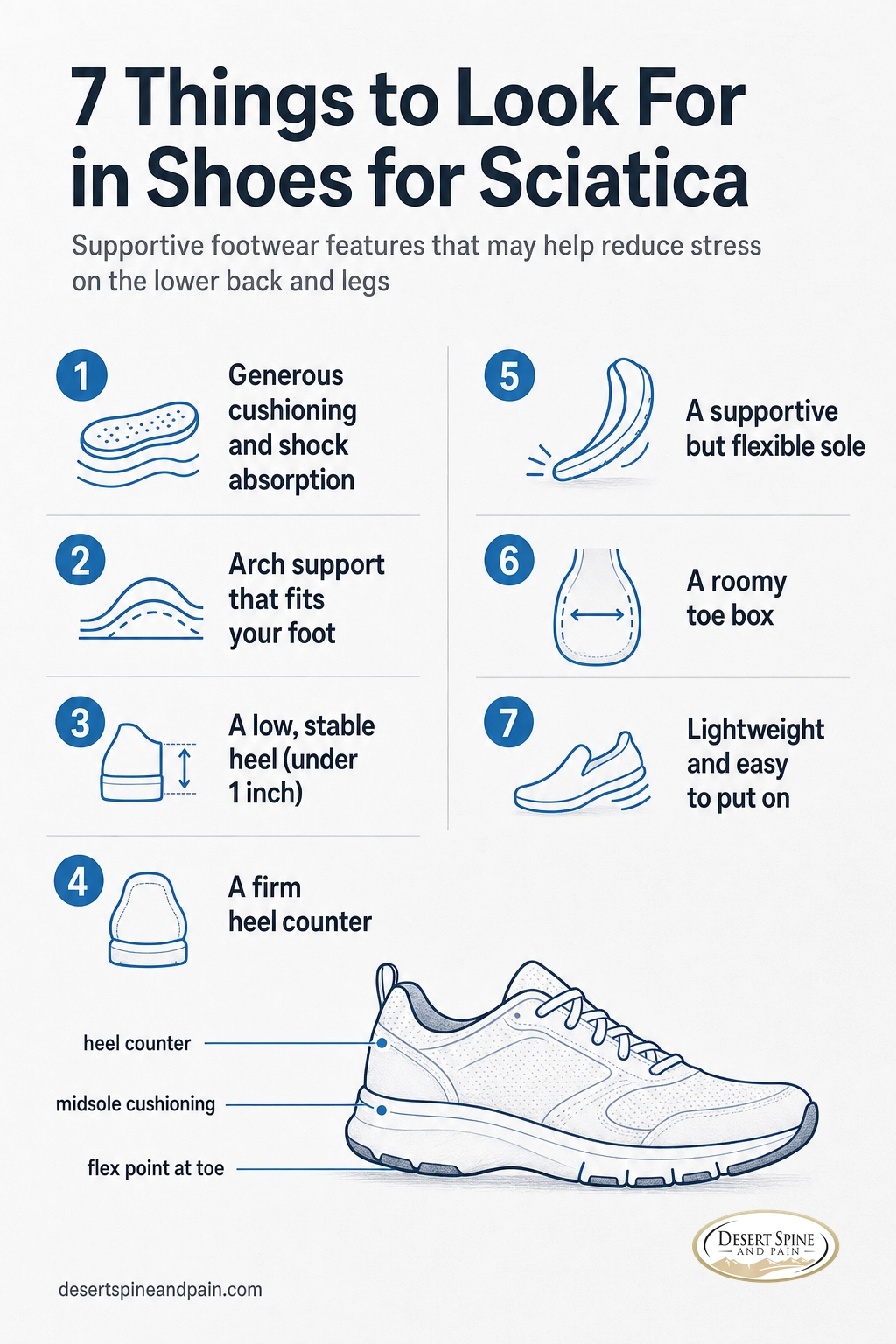
- Seven features matter most: cushioning, arch support, a low stable heel, a firm heel counter, a supportive-but-flexible sole, a roomy toe box, and light weight.
- Match the shoe to your foot, not to a top-10 list. Arch support only helps if it fits your arch, so comfort on your feet beats any review score.
- Avoid the extremes: flimsy flat shoes and worn-out sneakers give no support, and high heels shift your weight forward.
- Supportive shoes work best alongside stretching, movement, and the right care. If pain lasts more than a few weeks or worsens, see a spine specialist.

What's in This Guide
Can the Right Shoes Really Help Sciatica?
Sciatica is nerve pain that travels from your lower back through your hip and down the back of your leg, following the path of the sciatic nerve. It happens when something in your spine presses on or irritates that nerve or one of its roots, most often a herniated disc, bone spurs, or a narrowing of the spinal canal. Because the problem starts in your spine, no shoe can reach it. If you want to understand the root cause, start with our overview of what causes sciatica.
Sciatica is also extremely common, which is why "best shoes for sciatica" is such a popular search. Up to 40% of people deal with it at some point in their lives, and sciatica sits on top of a much larger wave of back pain worldwide.
And the burden is growing. The World Health Organization projects low back pain cases will climb from 619 million in 2020 to 843 million by 2050, driven mainly by population growth and aging. More people on their feet with sensitive backs means more people who benefit from footwear that cushions and supports every step.
Global Low Back Pain Cases: 2020 vs. 2050 (projected)
Source: World Health Organization, Low Back Pain fact sheet.So where do shoes fit in? Every time your heel strikes the ground, a shock wave travels up through your foot, ankle, knee, and into your spine. A cushioned, supportive shoe softens that impact and helps keep your foot, leg, and pelvis aligned as you move. When your arch collapses or your foot rolls inward, your gait changes, and that altered movement can add strain higher up the chain. Leading medical centers include supportive footwear and good posture in their everyday advice for managing and preventing sciatic pain, right alongside staying active with low-impact movement like walking and swimming.
Myth: the right pair of shoes will cure my sciatica. This is the most important thing to understand before you shop. Shoes cannot decompress a nerve or heal a herniated disc. If a page promises a shoe that "fixes" or "cures" sciatica, treat it as a sales pitch, not medical advice. The honest goal is comfort and support: the right shoes reduce the aggravating factors so you can move more and hurt less while the underlying cause is actually treated.
Source: Harvard Health Publishing | World Health Organization | Cleveland Clinic
What to Look For: 7 Features That Matter
Forget brand names for a moment. A shoe helps sciatica because of how it is built, not because of a logo. These are the seven features to check before you buy, in roughly the order they matter for a sensitive sciatic nerve.
1 Generous Cushioning and Shock Absorption
Cushioning is the feature that matters most for most people with sciatica. A thick, responsive midsole absorbs the shock of each step before it reaches your spine, so you feel less jarring when you walk on hard floors or concrete. Look for a plush but stable midsole foam. Beware of cushioning so soft that your foot sinks and wobbles, because stability still matters.
2 Arch Support That Fits Your Foot
Arch support keeps your foot from collapsing inward and helps hold your whole leg in better alignment. The key word is "fits." A high-arch insert in a low-arch foot can cause as much trouble as no support at all. If you know your arch type (high, neutral, or flat), match the shoe to it. If you are not sure, a shoe with a supportive but moderate arch and a removable insole is the safest starting point, because you can swap in an insole that fits.
3 A Low, Stable Heel
A low heel keeps your weight balanced over your pelvis instead of pushing it forward. Aim for a heel under about one inch. The research on high heels and back pain is mixed and does not prove heels cause sciatica, but studies do show that walking in high heels changes the curve of your lower spine. For a sensitive back, a low and stable heel is the comfortable, low-risk choice.
4 A Firm Heel Counter
The heel counter is the stiff cup at the back of the shoe that wraps your heel. A firm counter holds your heel steady so your foot does not slide around with each step, which keeps your gait controlled. Squeeze the back of the shoe: it should resist, not fold flat. A sloppy heel that lets your foot shift adds the kind of small, repeated strain a sciatic nerve does not need.
5 A Supportive, But Flexible, Sole
You want a sole that is stable through the middle yet still bends where your foot naturally bends, at the ball of the foot behind the toes. Try the twist test: the shoe should resist twisting through the arch but flex at the toe. A board-stiff sole forces your leg to compensate, and a sole that bends in half everywhere gives no support. The middle ground is what you are after.
6 A Roomy Toe Box
A wide, rounded toe box lets your toes spread and grip the ground, which improves balance and reduces pressure points. This matters even more if you have bunions, hammertoes, or wide feet. Cramped toes change how you push off and can nudge your whole gait off balance.
7 Light Weight and Easy On
A lighter shoe asks less of your legs and back over a long day. Slip-on or hands-free designs also mean less bending to tie laces, which is a real benefit on a bad flare day. Weight is the last tiebreaker, not the first priority, but between two shoes that are otherwise equal, lighter usually wins.
A useful shortcut: shoes that carry the American Podiatric Medical Association (APMA) Seal of Acceptance have been reviewed by a panel of podiatrists for foot health. It is a helpful filter, not a guarantee. The APMA says it is not a testing laboratory and does not review every shoe on the market, so the seal tells you a podiatric panel approved a product, not that a specific shoe will fit your feet.
Source: American Podiatric Medical Association | High-heeled walking and lumbar curvature, Gait & Posture (PubMed)
Best Types of Shoes for Sciatica
Once you know the features, the "best" shoe is just the one in each category that fits your foot and checks those boxes. Here is how the common categories stack up, so you can match a type to how you spend your day.
| Shoe Type | Best For | Why It Works for Sciatica | Watch Out For |
|---|---|---|---|
| Cushioned walking or running shoes | Daily wear, walking, errands, exercise | Maximum shock absorption, firm heel counter, supportive midsole, removable insoles | Pick stable cushioning, not the softest foam you can find |
| Orthopedic / adjustable comfort shoes | Wide feet, bunions, swelling, flare days | Roomy toe box, often extra-depth for insoles, easy adjustable closures | Confirm the arch support actually fits your arch |
| Supportive sandals and recovery slides | Home, warm weather, post-walk recovery | Contoured footbed with arch support instead of a flat sole | Avoid thin flat flip-flops with zero support |
| Supportive work and dress shoes | Long shifts on your feet, the office | Cushioned footbed, low stable heel, firm counter in a dressier shape | Skip narrow toes and heels over about one inch |
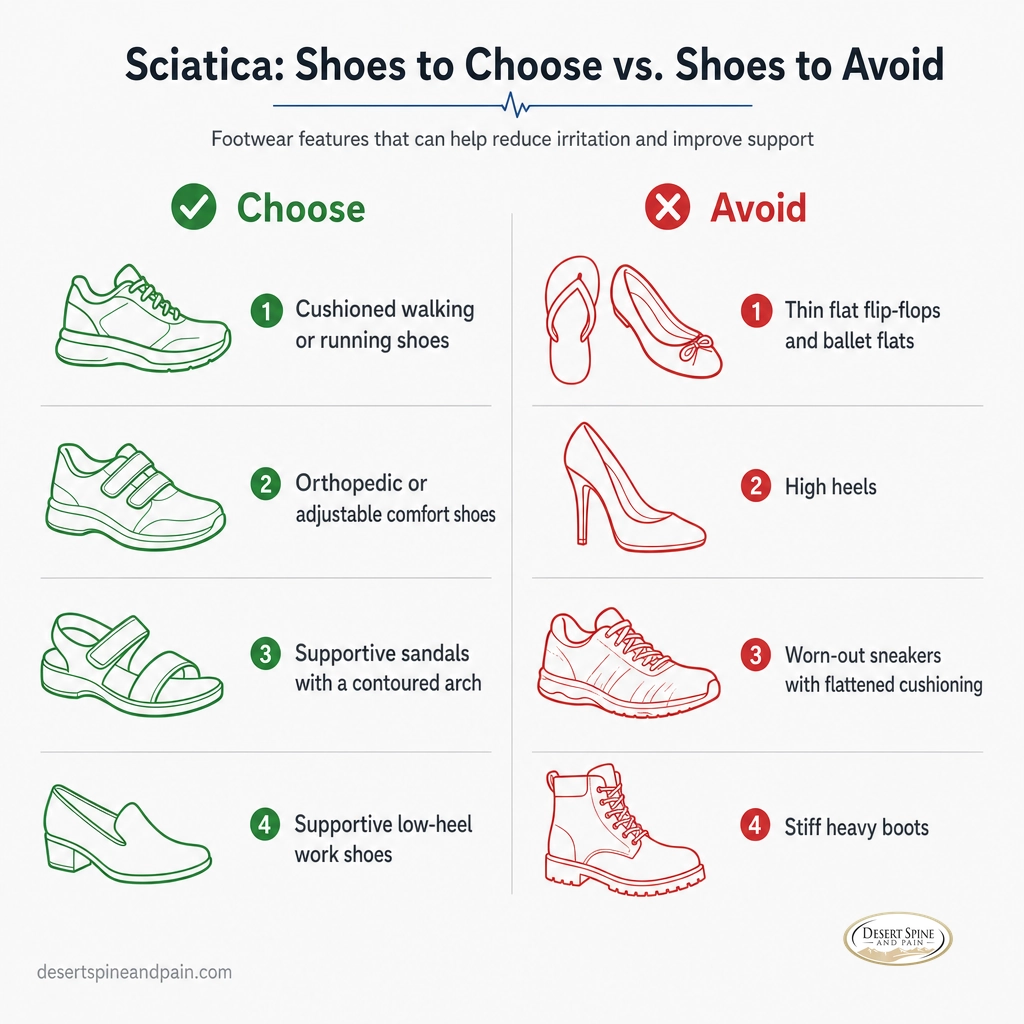
Notice what is not here: a single magic model. The cushioned walking shoe that one person swears by can feel wrong to the next person because their arches, foot width, and gait are different. That is why trying shoes on, late in the day when your feet are at their largest, and walking in them beats buying by review score. Footwear is one piece of a larger plan that also includes targeted sciatica stretches, how you sit, and how you sleep.
Shoes and Habits to Avoid
Sometimes the fastest win is retiring the shoes that make things worse. If you have sciatica, these are the ones to think twice about.
The worst offenders for a sensitive sciatic nerve:
- Thin, flat flip-flops and ballet flats. They offer almost no cushioning or arch support, so every step sends more impact up your leg, and your toes grip to keep them on.
- High heels. They push your weight forward and tilt your pelvis, which changes your lower-back posture and your gait.
- Worn-out sneakers. Even a great shoe stops protecting you once the midsole is compressed. If your shoes are more than about a year old or 300 to 500 miles of walking, the cushioning is likely spent.
- Stiff, heavy boots with no give. A sole that never flexes forces your hips and back to compensate with every stride.
Swapping a worn or flimsy pair for a supportive one is one of the easiest changes on this list, and it often makes standing and walking noticeably more comfortable within days.
How to Get the Most From Supportive Shoes
Good shoes do more when they are part of a routine. A few habits stretch their benefit further.
Add an insole if the shoe allows it. A quality over-the-counter insole can upgrade an otherwise good shoe with the exact arch support and cushioning your foot needs. Removable factory insoles are a green flag because they make room for one.
Replace shoes before they are dead. Cushioning wears out silently. If you walk a lot, rotate two pairs and replace them on a schedule rather than waiting until they hurt.
Pair footwear with movement, not bed rest. Prolonged rest tends to make sciatica worse, not better. Gentle activity and stretching help relieve pressure on the nerve, and supportive shoes make that movement more comfortable. For the full conservative playbook, see our guide to treating sciatica at home, and for the hours you are off your feet, the right support continues with the best mattress for sciatica and how to sit with sciatica.
Supportive footwear, smart posture, movement, and good sleep support all work together. None of them replaces proper treatment when the nerve problem itself needs attention.
Explore conservative sciatica careSource: Cleveland Clinic
When Shoe Changes Aren't Enough
Footwear, stretching, and activity are the right first steps for most sciatica, and they often settle a flare within weeks. But shoes treat the symptom, not the source. If your sciatica is dragging on or escalating, it is time to find out exactly what is pressing on the nerve.
Make an appointment with a spine specialist if any of these apply:
- Your sciatica has lasted more than a few weeks, or it keeps coming back.
- The pain is getting worse despite rest, stretching, and supportive shoes.
- The leg pain is severe enough to disrupt sleep, work, or daily activity.
Seek urgent medical care if you develop new weakness in a leg or foot, numbness around the groin or inner thighs (the "saddle" area), or any loss of bladder or bowel control. These can signal a serious problem that needs prompt evaluation, not a new pair of shoes. When in doubt, get checked. You can also read more about what kind of doctor treats sciatica.
At Desert Spine and Pain, dual board-certified spine surgeon and neurosurgeon Dr. David L. Greenwald evaluates the actual cause of your sciatica and builds a plan around it, starting with the least invasive options. That can mean interventional pain procedures such as epidural steroid injections and nerve blocks, and advancing to minimally invasive surgery only when it is truly warranted. We serve patients across Phoenix, Scottsdale, Paradise Valley, Tempe, Mesa, and the greater metro, and we welcome second opinions.
See interventional pain treatments Book a consultationFrequently Asked Questions
Can the right shoes cure sciatica?
What features should I look for in shoes for sciatica?
Are flat shoes or high heels worse for sciatica?
Do I need custom orthotics or will store-bought insoles work?
When should I see a doctor about sciatica instead of just changing shoes?
Methodology & Sources
How we built this guide
This guide combines established clinical guidance on sciatica and low back pain with the biomechanical principles behind supportive footwear. Prevalence and conservative-care statements are drawn from Tier 1 medical sources. Footwear-feature recommendations reflect widely accepted principles of shock absorption, arch support, and gait stability rather than endorsements of specific commercial products. We name no single "best" model on purpose, because the right shoe depends on your individual foot type, gait, and comfort.
Important: this article is educational and does not replace a medical evaluation. Shoes can ease sciatica symptoms, but only a clinician can diagnose and treat the spinal cause of your pain.
- Harvard Health Publishing, Sciatica of all the nerve (lifetime prevalence)
- World Health Organization, Low Back Pain fact sheet (global burden and projections)
- Cleveland Clinic, Sciatica (causes and conservative care)
- American Podiatric Medical Association, Seal of Acceptance (footwear review program)
- High-heeled walking decreases lumbar lordosis, Gait & Posture (PubMed) (heel height and spinal curvature)