
Spinal Fusion
Sacroiliac (SI) Joint Fusion Surgery
(Posterior/Lateral)
SI Joint Fusion in Phoenix, AZ — Lasting Relief for a Painful SI Joint
When a sacroiliac joint is painful and unstable and hasn't responded to injections, a minimally invasive SI joint fusion stabilizes it for lasting relief. Performed by Dr. David L. Greenwald, MD, FAANS, FACS.

Over 100 5-Star Reviews!
















Over 30 Years Experience in Orthopedic & Neuro Spine Surgeries.
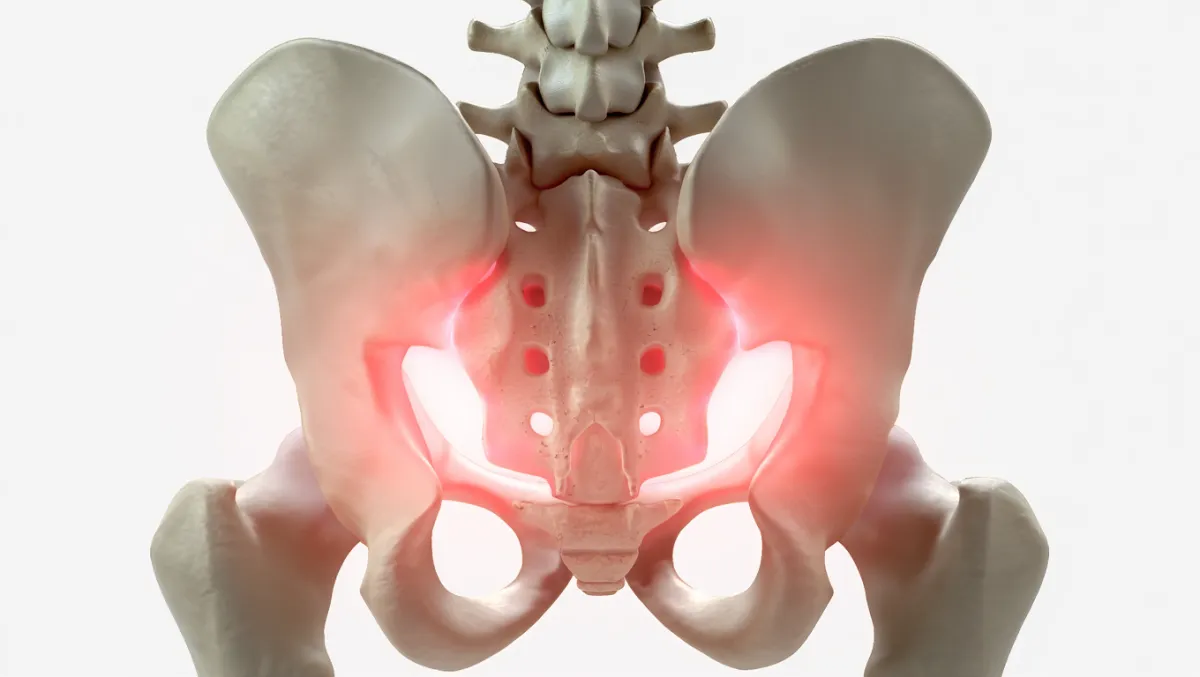
A sacroiliac joint fusion stabilizes a painful, unstable SI joint — where the spine meets the pelvis — with small implants placed across the joint. Done minimally invasively, it offers lasting relief for the right patient when injections and conservative care haven't been enough.
Book a Consultation — (602) 566-9500How an SI Joint Fusion Works
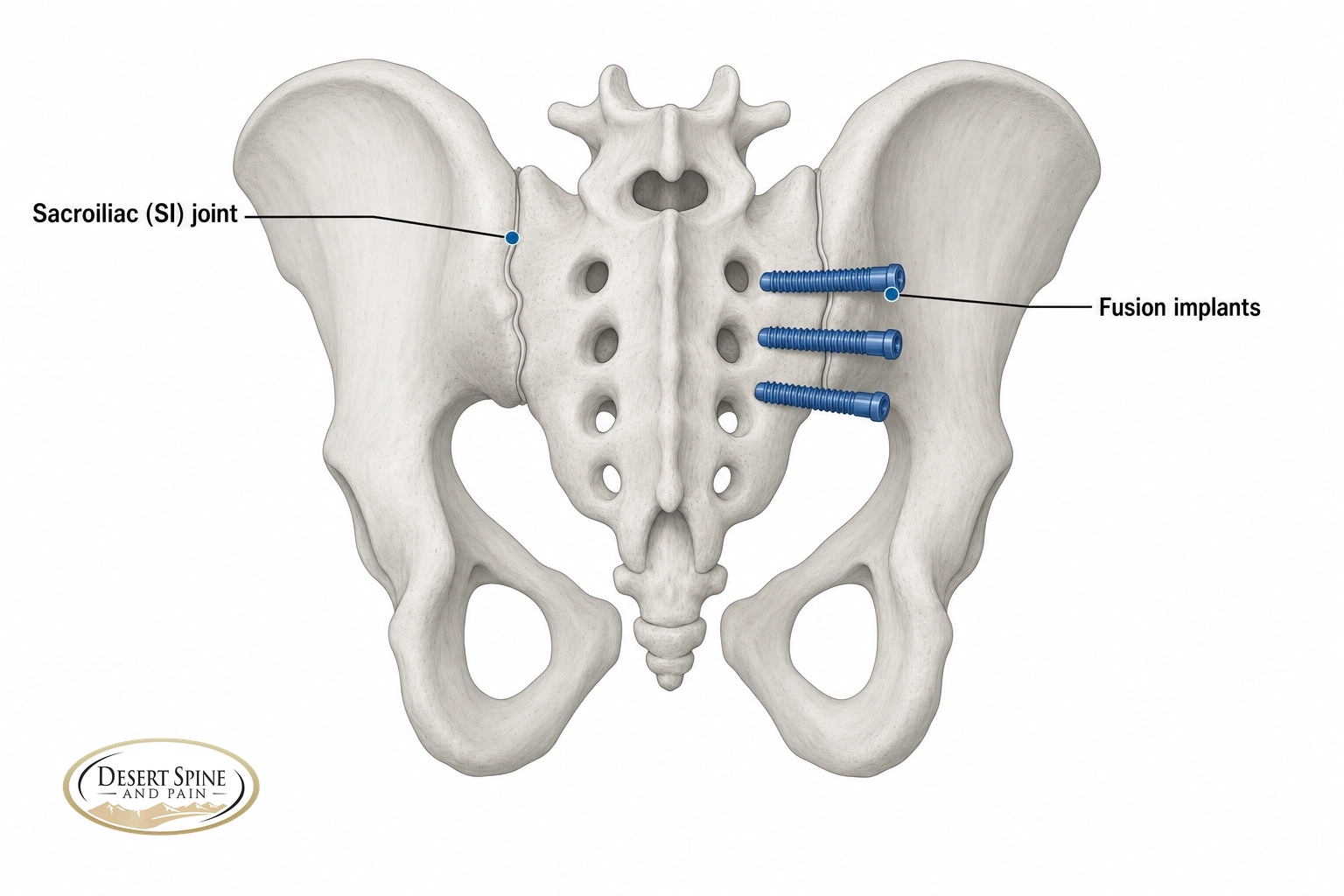
Procedure Overview
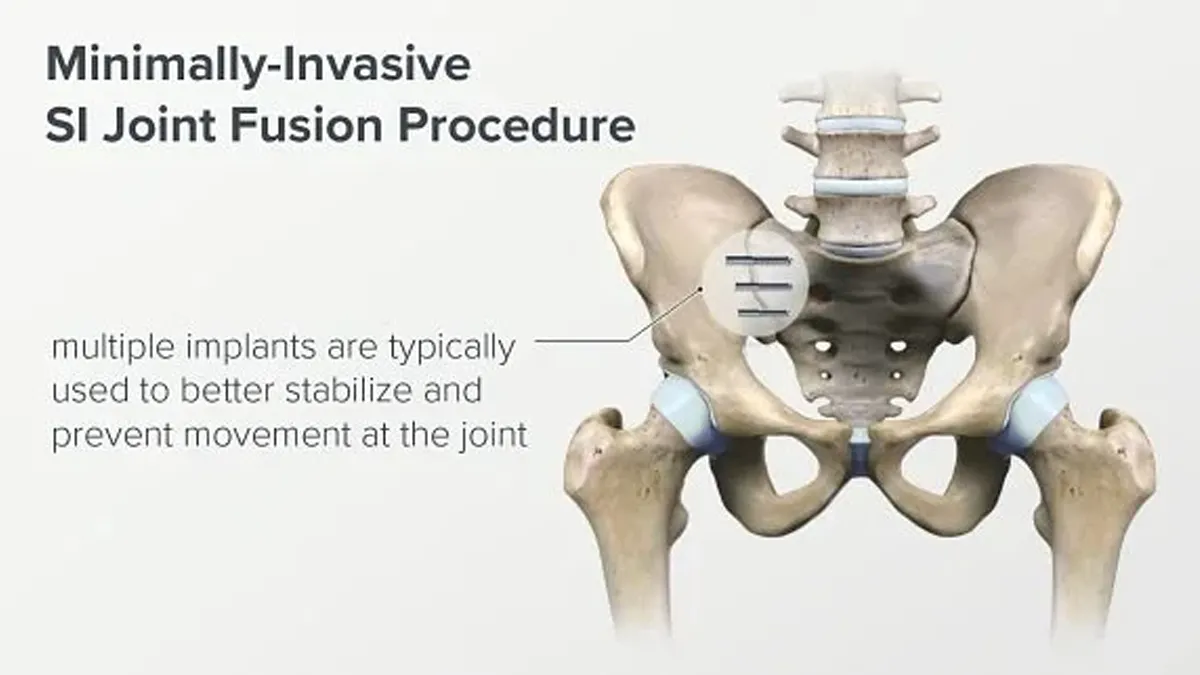
When the sacroiliac joint is worn and unstable, the abnormal motion causes persistent lower back and buttock pain. An SI joint fusion places small implants across the joint to stabilize it and allow the bone to fuse, ending that painful motion. Modern techniques are minimally invasive, done through a small incision, and are reserved for patients whose SI pain has been confirmed and hasn't responded to non-surgical care.
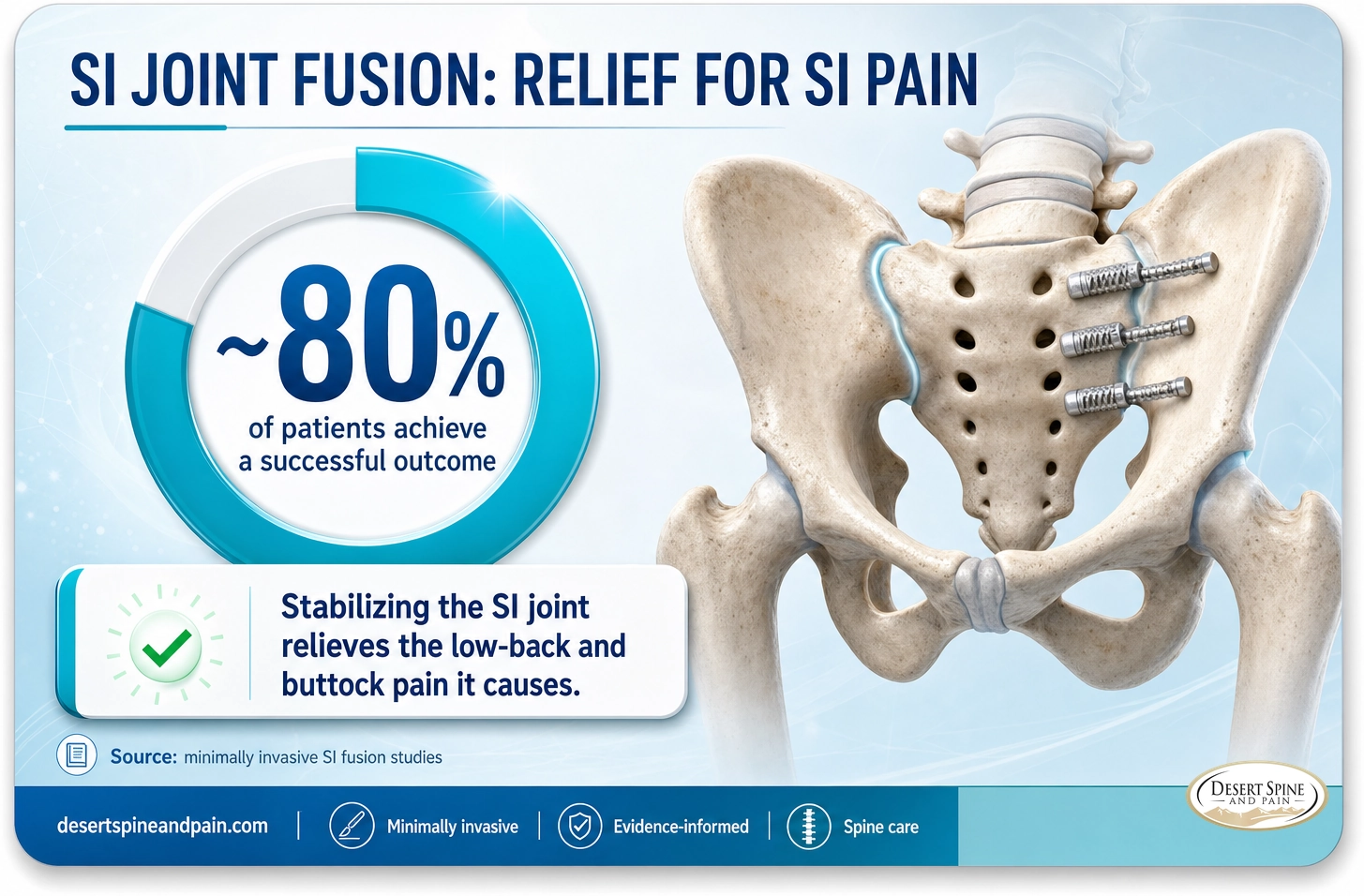
Conditions We Treat
Am I a Candidate?
SI fusion is considered when SI joint pain has been confirmed — typically by diagnostic SI joint injections — and hasn't responded to physical therapy, injections, and radiofrequency ablation. That confirmation is what makes fusion reliable: we fuse a joint we've proven is the source. A minimally invasive MIS SI fusion is the typical approach.
Book a Consultation — (602) 566-9500Benefits & Risks
Lasting relief for a confirmed, unstable SI joint; minimally invasive with a small incision; ends the painful abnormal motion; reserved for proven SI pain so results are reliable.
Risks include soreness, infection, implant issues, and, uncommonly, nerve irritation or incomplete relief. Dr. Greenwald reviews your individual risks in detail.
Expected Outcomes
For patients with a confirmed, unstable SI joint that hasn't responded to conservative care, SI fusion provides reliable, lasting relief of the SI-driven pain. Because candidacy is established by diagnostic injections first, results are strong in well-selected patients. We set clear, individualized expectations.
Life Beyond the Pain

How It's Performed
Through a small incision, under image guidance, one to three implants are placed across the sacroiliac joint to stabilize it. The joint surfaces are prepared so the bone fuses across the implants over time. The minimally invasive approach spares the surrounding muscle and allows a relatively quick recovery.
Your procedure is performed by Dr. Greenwald at an affiliated, accredited surgical facility — not in the clinic office — with a full surgical and anesthesia team.

Recovery & Return to Activity
| Timeframe | What to expect |
|---|---|
| First 1–2 weeks | Usually home the same day or after one night. Weight-bearing is often limited at first with a walker or crutches; short walks as directed. |
| Weeks 2–6 | Weight-bearing and activity increase per your surgeon's plan; physical therapy typically begins. |
| Months 2–3 | Return to most normal activities as the fusion progresses. |
| Months 6–12 | The fusion solidifies and most patients reach full, lasting relief. |
Recovery is more gradual than an injection but is helped by the minimally invasive approach. Your weight-bearing plan and timeline are tailored to you.
Insurance, Out-of-Network & Cost
Cost and coverage shouldn't stand between you and relief. Desert Spine and Pain welcomes out-of-network patients and will walk you through what your evaluation and treatment are likely to involve before anything is scheduled — so there are no surprises. We'll help you understand your benefits and options, whether you're using insurance, paying out-of-pocket, or being treated under a personal-injury claim.
Proudly Serving the Greater Phoenix, Arizona Area
Patients travel to Desert Spine and Pain from across Arizona for specialist spine care — because the right spine surgeon is worth the drive. We welcome patients from Phoenix and communities throughout the Valley and beyond:
…and surrounding Arizona communities. Out-of-network patients are welcome, and no referral is required — schedule a consultation.
Why Choose Our Spine Specialists in Phoenix
Choosing the right spine specialist in Phoenix matters. At Desert Spine and Pain, your care is led by Dr. David L. Greenwald, MD, FAANS, FACS — a physician who is both a board-certified spine surgeon and a neurosurgeon. That dual expertise is rare, and it means one expert can guide you across the full spectrum of care — from a simple injection to complex surgery — and recommend what is genuinely best for you, whether you need a spine doctor for conservative care or a surgeon when surgery is truly the answer.
A rare dual credential — so the specialist who treats you can also perform surgery if it's ever needed.
Most patients get better without surgery. We only advance when your condition truly requires it.
No referral needed. We make it straightforward to see a top spine specialist, even out-of-network.
24/7 concierge response and close coordination with personal-injury attorneys.
Lasting relief for a painful SI joint.
See a dual board-certified spine surgeon and neurosurgeon in Phoenix to find out whether a minimally invasive SI joint fusion is right for you.
Book a Consultation — (602) 566-9500SI Joint Fusion: Frequently Asked Questions
How do you know the SI joint is really the problem?
Before fusion, SI joint pain is confirmed — typically with diagnostic SI joint injections. We fuse a joint only once we've proven it's the source, which is what makes the results reliable.
Is SI fusion minimally invasive?
Yes. Modern SI fusion is done through a small incision with image guidance, sparing the surrounding muscle for a quicker recovery than open surgery.
Will I need injections first?
Typically yes — physical therapy, SI injections, and often radiofrequency ablation come first. Fusion is reserved for a confirmed, unstable joint that hasn't responded.
How long is recovery?
Weight-bearing is limited at first, with a gradual return to activity over weeks to months as the fusion solidifies.
Do I need a referral in Phoenix?
No. You can schedule directly with our Phoenix spine specialists, and we welcome out-of-network patients.



Dr. David L. Greenwald, MD
Neuro-Spine Surgeon


Call Now!
Desert Spine and Pain
A Spine Specialist is standing by.
Relief is just a phone call away!
Available Around the Clock.
Phone: (602) 566-9500
Email: [email protected]

Contact Us

Book a Consultation.
If you’re experiencing persistent lower back, hip, or pelvic pain that hasn’t responded to conservative care, Sacroiliac Joint Fusion—either minimally invasive posterior or lateral—may be the solution. Dr. Greenwald and his compassionate team will conduct a thorough evaluation, review imaging, and determine which approach is best suited for your condition. Every step you take toward expert spine care brings you closer to comfort, strength, and freedom of movement. Schedule your consultation today and learn how Dr. Greenwald’s minimally invasive SI joint fusion techniques can help you return to an active, pain-free life.
Voted Best Spine Doctor
Over 30 Years Experience in Orthopedic & Neuro Spine Surgeries.

Dr. David L. Greenwald, MD, FAANS, FACS
Neurosurgeon | Spine Surgeon | Regenerative Medicine
Dr. David L. Greenwald, MD, FAANS, FACS, is a board-certified spine surgeon and neurosurgeon with advanced expertise in sacroiliac joint fusion. He commonly uses it to treat conditions such as sacroiliac degeneration, which can cause pain, numbness, or weakness. Using advanced, minimally invasive techniques whenever possible, Dr. Greenwald relieves nerve compression and instability while protecting healthy tissue and preserving spinal stability. His skill and patient-centered approach help patients throughout the greater Phoenix, Arizona area experience meaningful pain relief, reduced recovery time, and restored mobility.
Book your Spine Care Consultation Today!

Desert Spine and Pain
Patient Centered & Partner Focused
Quick Links
Resources
Connect With Us
21001 N Tatum Blvd SUITE 78 1640, Phoenix, AZ 85050
© Desert Spine and Pain. 2026. All Rights Reserved. Sitemap