
Ablation & Stimulation
Spinal Cord Stimulation (SCS)
Spinal Cord Stimulation in Phoenix, AZ — Lasting Relief for Severe, Chronic Nerve Pain
For severe nerve pain that hasn't responded to other care, spinal cord stimulation can mask the pain long-term — and you try it before committing. Performed by Dr. David L. Greenwald, MD, FAANS, FACS, a dual board-certified spine surgeon and neurosurgeon.

Over 100 5-Star Reviews!














Over 30 Years Experience in Orthopedic & Neuro Spine Surgeries.
Spinal cord stimulation (SCS) uses a small implanted device to deliver gentle electrical signals that mask pain before it reaches the brain. For severe, persistent nerve pain that hasn't responded to other treatments, it can provide lasting relief — and you trial it first, so you know it works before anything permanent.
Book a Consultation — (602) 566-9500How Spinal Cord Stimulation Works
What Is Spinal Cord Stimulation?
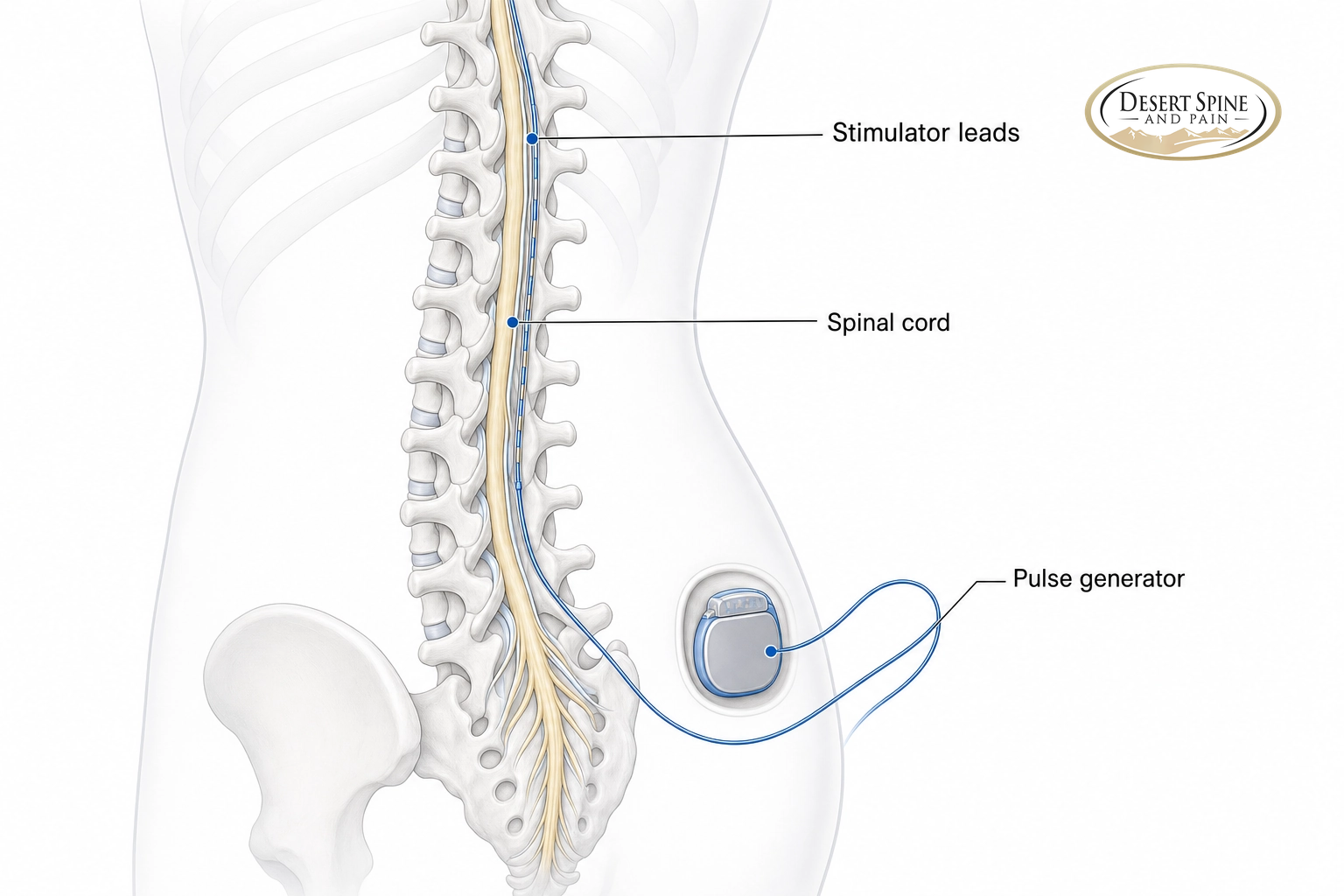
Spinal cord stimulation uses thin leads placed in the epidural space near the spinal cord, connected to a small pulse generator implanted under the skin. The device delivers mild electrical signals that interrupt or mask pain signals before they reach the brain. It's used for severe, chronic nerve pain — including pain that persists after spine surgery — when other treatments haven't provided enough relief.
Conditions We Treat
Chronic Pain Syndromes
Back or neck pain that persists for months and becomes self-reinforcing.
Learn MoreAm I a Candidate?
SCS is considered for severe, persistent nerve pain — such as ongoing leg pain after spine surgery or chronic radiating pain — that hasn't responded to injections, ablation, and conservative care. A surgeon who understands the nervous system is ideally suited to evaluate whether it's right for you.
Book a Consultation — (602) 566-9500Benefits & Risks
Trial-first, so you know it works before anything permanent; lasting relief for severe nerve pain; reversible and adjustable; can reduce reliance on other treatments.
Procedure risks include soreness, lead movement, and, rarely, infection. Not everyone responds — which is exactly why the trial comes first. Your surgeon reviews your specific risks beforehand.
Life Beyond the Pain

How It Works & What to Expect
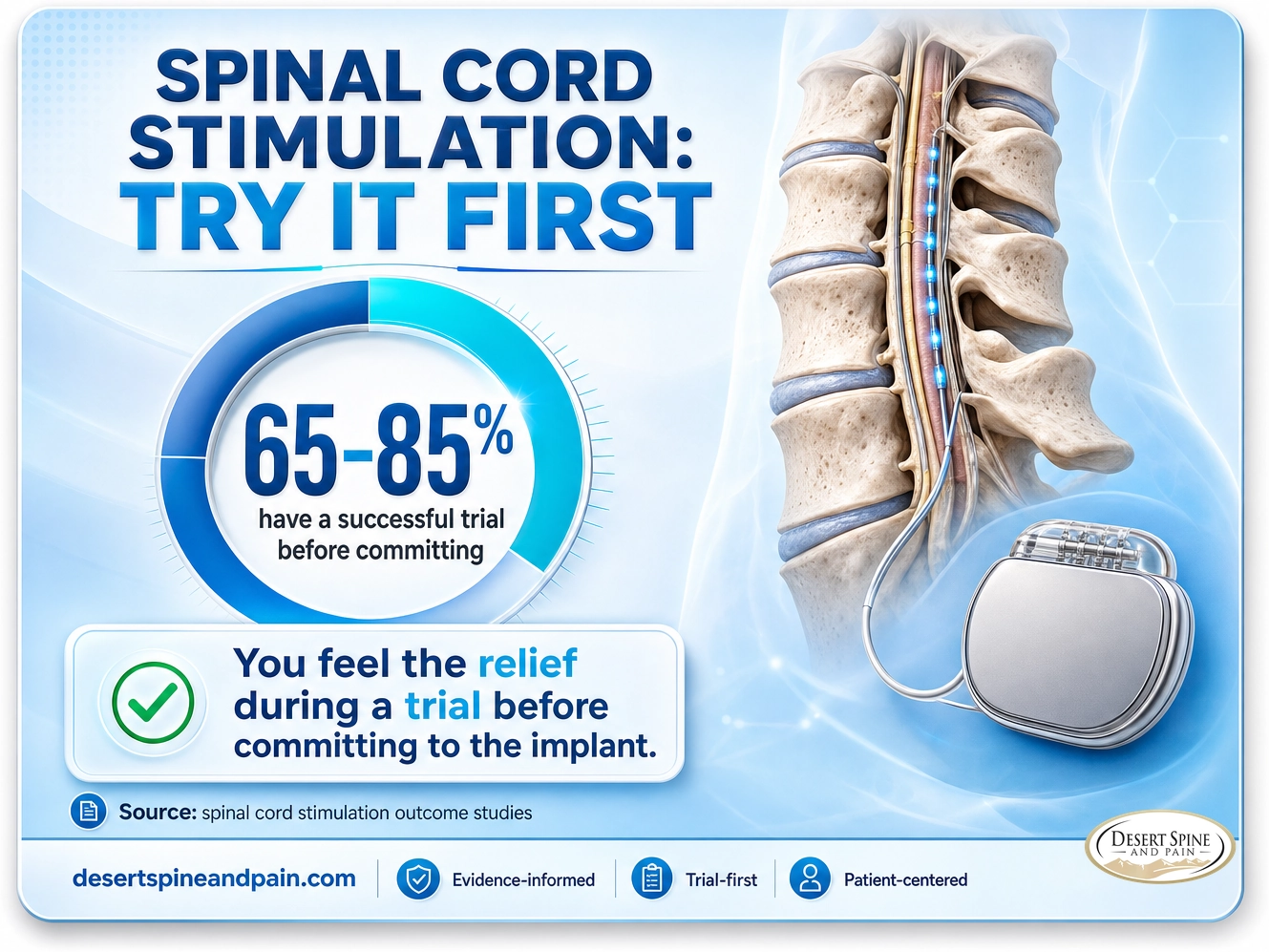
SCS is done in two stages. First, a trial: temporary leads are placed (a minor, needle-based procedure) so you can experience the relief for several days in daily life. If the trial clearly helps, the permanent system is implanted in a short outpatient procedure. This trial-first approach means you know it works before committing.
Recovery & Results
After the trial, there's essentially no downtime. If you proceed to the implant, recovery is typically quick, with activity restrictions for a short period while the leads settle. Many patients gain substantial, lasting relief and reduce their reliance on other treatments.

Why Choose Our Spine Specialists in Phoenix
Choosing the right spine specialist in Phoenix matters. At Desert Spine and Pain, your care is led by Dr. David L. Greenwald, MD, FAANS, FACS — a physician who is both a board-certified spine surgeon and a neurosurgeon. That dual expertise is rare, and it means one expert can guide you across the full spectrum of care — from a simple injection to complex surgery — and recommend what is genuinely best for you, whether you need a spine doctor for conservative care or a surgeon when surgery is truly the answer.
A rare dual credential — so the specialist who treats you can also perform surgery if it's ever needed.
Most patients get better without surgery. We only advance when your condition truly requires it.
No referral needed. We make it straightforward to see a top spine specialist, even out-of-network.
24/7 concierge response and close coordination with personal-injury attorneys.
Insurance & Out-of-Network
We welcome out-of-network patients and will explain your likely costs and coverage before anything is scheduled — no surprises, and no referral required.
Proudly Serving the Greater Phoenix, Arizona Area
Patients travel to Desert Spine and Pain from across Arizona for specialist spine care — because the right spine surgeon is worth the drive. We welcome patients from Phoenix and communities throughout the Valley and beyond:
…and surrounding Arizona communities. Out-of-network patients are welcome, and no referral is required — schedule a consultation.
Try lasting relief before you commit.
See a dual board-certified spine surgeon and neurosurgeon in Phoenix to find out whether spinal cord stimulation is right for you.
Book a Consultation — (602) 566-9500Spinal Cord Stimulation: Frequently Asked Questions
Do I have to commit to a permanent implant?
No — that's the key advantage. You trial SCS with temporary leads first and only proceed to a permanent system if the trial clearly relieves your pain.
What kind of pain does SCS treat?
Severe, chronic nerve pain that hasn't responded to other care — including persistent leg or back pain after spine surgery and chronic radiating pain.
Is it reversible?
Yes. The system can be adjusted or removed, which makes the trial-first approach especially reassuring.
Why see a spine surgeon and neurosurgeon for this?
SCS works directly with the spinal cord and nerves. Dr. Greenwald's dual training is well suited to evaluating and performing it.
Do I need a referral in Phoenix?
No. You can schedule directly with our Phoenix spine specialists, and we welcome out-of-network patients.


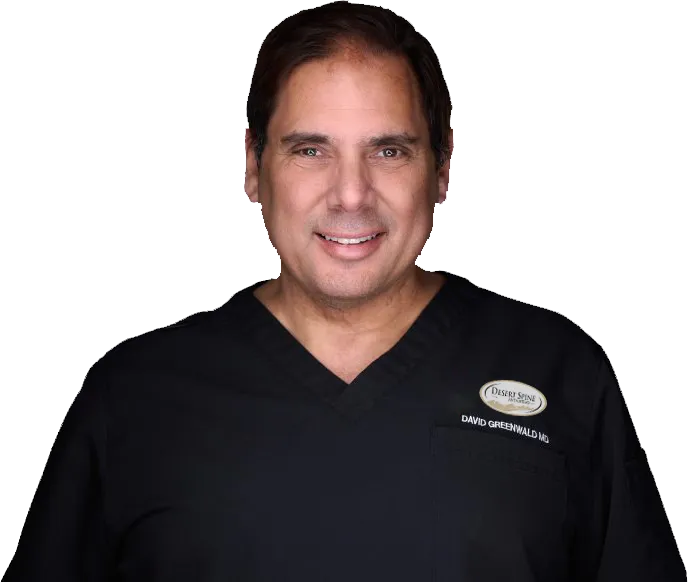
Dr. David L. Greenwald, MD
Neuro-Spine Surgeon


Call Now!
Desert Spine and Pain
A Spine Specialist is standing by.
Relief is just a phone call away!
Available Around the Clock.
Phone: (602) 566-9500
Email: [email protected]

Contact Us
Book a Consultation.
If you’re living with chronic back, leg, or nerve pain and haven’t found relief through other treatments, Spinal Cord Stimulation (SCS) may be the next step toward lasting comfort. Dr. Greenwald and his caring team will evaluate your condition, discuss your symptoms, and determine whether SCS is the right solution for your needs. Every step you take toward pain management brings you closer to freedom and a better quality of life. Schedule your consultation today and learn how Dr. Greenwald’s expertise in SCS can help you move forward with confidence and relief.
Voted Best Spine Doctor
Over 30 Years Experience in Orthopedic & Neuro Spine Surgeries.

Dr. David L. Greenwald, MD, FAANS, FACS
Neurosurgeon | Spine Surgeon | Regenerative Medicine
Dr. David L. Greenwald, MD, FAANS, FACS, is a board-certified spine surgeon and neurosurgeon with advanced expertise in spinal cord stimulation. He commonly uses it to treat conditions such as chronic pain, radiculopathy, and lower back pain, which can cause pain, numbness, or weakness. Using advanced, minimally invasive techniques whenever possible, Dr. Greenwald relieves nerve compression and instability while protecting healthy tissue and preserving spinal stability. His skill and patient-centered approach help patients throughout the greater Phoenix, Arizona area experience meaningful pain relief, reduced recovery time, and restored mobility.
Book your Spine Care Consultation Today!

Desert Spine and Pain
Patient Centered & Partner Focused
Quick Links
Resources
Connect With Us
21001 N Tatum Blvd SUITE 78 1640, Phoenix, AZ 85050
© Desert Spine and Pain. 2026. All Rights Reserved. Sitemap