

Spinal Cord Injury Lifetime Cost Statistics (2026): Costs by Severity and Age
A spinal cord injury is among the most expensive medical conditions to manage over a lifetime, with direct costs ranging from about $2.1 million to more than $6.2 million depending on severity and age at injury. And those figures cover only medical care and living expenses, not lost wages. This 2026 reference breaks down the lifetime cost of spinal cord injury using data from the National Spinal Cord Injury Statistical Center.
- Lifetime direct costs range from $2.1M to over $6.2M for injury at age 25, depending on severity, in 2024 dollars.
- High tetraplegia is the most expensive at over $6.2 million lifetime for injury at 25.
- The first year is the costliest, from about $460,000 to $1.41 million by severity.
- Age at injury drives the total: injury at 25 costs far more than at 50 because of more years lived with the injury.
- These figures exclude lost wages, which average $95,309 per year on top of the direct costs.
- Recurring annual costs range from about $55,900 to over $244,000 depending on severity.
- SCI is among the costliest conditions in medicine to treat and manage across a lifetime.
What's in This Guide
Lifetime Cost by Severity
The single most important driver of lifetime cost is injury severity. The National Spinal Cord Injury Statistical Center estimates lifetime direct costs for each severity level, and the range is wide.
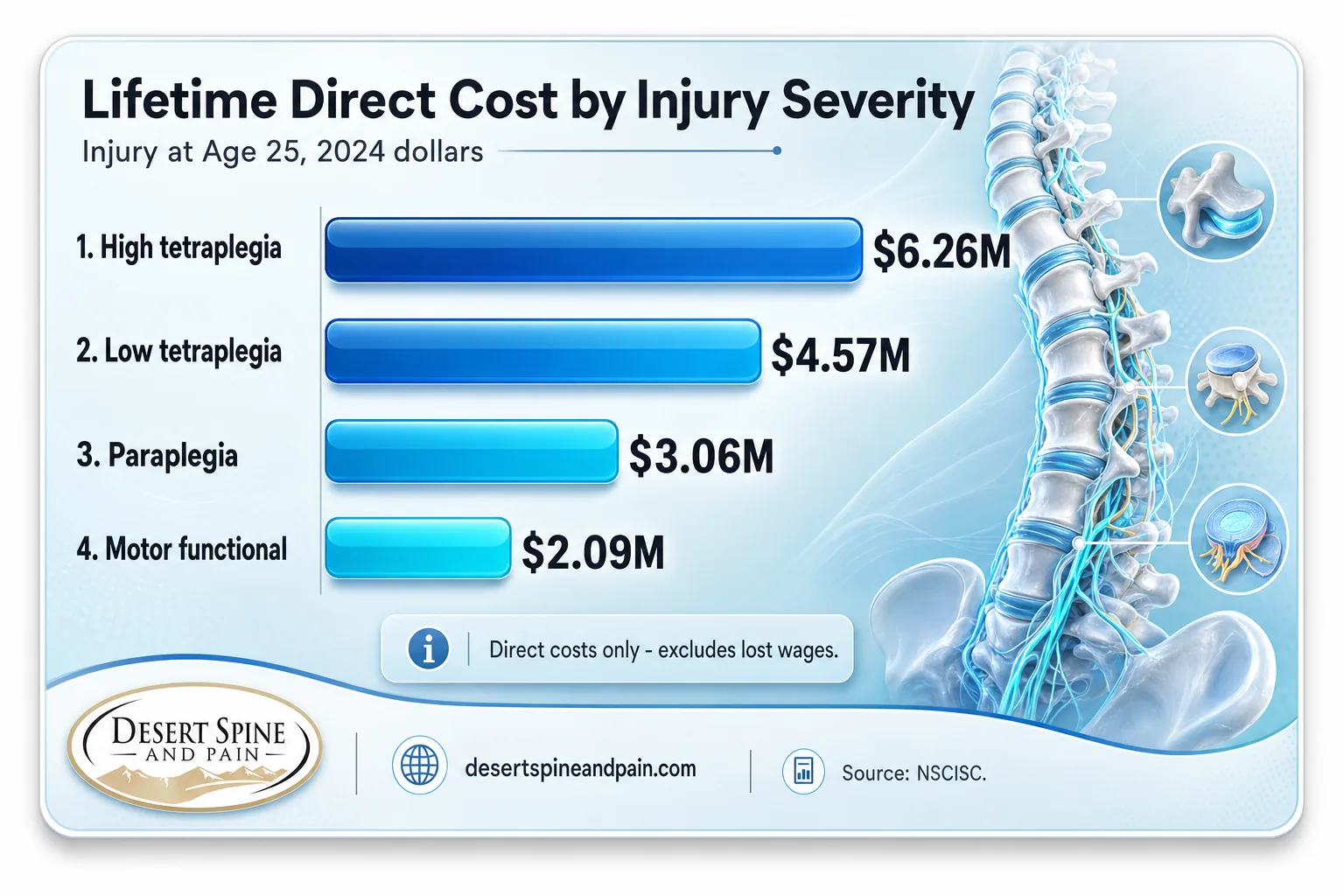
Even the least severe category exceeds two million dollars in lifetime direct cost. Independent reporting by UAB via Statista corroborates these figures, confirming lifetime costs of just over three million dollars for paraplegia and over six million for high tetraplegia at age 25. For the lost-income side of the picture, see our lost wages from spinal injury statistics.
Source: National Spinal Cord Injury Statistical Center
Explore the spine conditions we treatFirst-Year vs Recurring Costs
Lifetime cost is built from two components: a large first-year cost driven by acute care, surgery, and rehabilitation, and a smaller recurring annual cost that continues for life. The first year is by far the most expensive.
| Severity | First-year cost | Each later year |
|---|---|---|
| High tetraplegia (C1–C4) | $1,410,163 | $244,879 |
| Low tetraplegia (C5–C8) | $1,018,966 | $150,222 |
| Paraplegia | $687,262 | $91,042 |
| Motor functional (AIS D) | $460,224 | $55,900 |
The reason the first year dominates is straightforward: it includes emergency care, surgery, the acute hospital stay, and initial inpatient rehabilitation. After that, recurring costs cover ongoing medical care, equipment, personal assistance, and management of secondary complications. Those recurring costs are smaller each year but never stop, which is what turns them into millions over a lifetime.
First-Year Cost by Severity (2024 dollars)
Source: UAB via Statista
See our spine surgery optionsHow Age at Injury Changes the Total
Two people with identical injuries can have very different lifetime costs, and the deciding factor is often how old they were when injured. A younger person accumulates more years of recurring costs.
The age effect works through life expectancy. A younger survivor lives many more years with the injury, each adding recurring cost. This is why lifetime cost estimates always specify an age at injury, and why the same injury can carry a dramatically different price tag depending on when it happens.
Desert Spine and Pain Analysis: Age at injury is the multiplier hiding inside every cost estimate. The verified life-expectancy data shows a 20-year-old with paraplegia can expect roughly 40.7 more years of life, versus 28.7 for high tetraplegia. Each of those additional years adds recurring cost, so a younger age at injury raises the lifetime direct cost substantially for the same injury. This is why the standard NSCISC lifetime tables always anchor to a specific age at injury, and why any cost estimate that omits age is incomplete. Calculation and interpretation original to Desert Spine and Pain, derived from NSCISC cost methodology and UAB life-expectancy data.
Source: National Spinal Cord Injury Statistical Center
See age and demographic dataWhy It Costs So Much
Spinal cord injury costs are driven by the sheer breadth of needs the injury creates, extending far beyond the initial hospital stay.
What drives lifetime spinal cord injury costs:
- Acute and surgical care: emergency treatment, surgery, and intensive care in the first year.
- Inpatient rehabilitation: weeks of specialized rehab after the acute phase.
- Ongoing medical care: lifelong management and treatment of secondary complications.
- Equipment and technology: wheelchairs, from manual models to power systems costing tens of thousands, replaced every several years.
- Personal assistance and home modification: caregiving and accessibility changes.
Because healthcare costs tend to rise faster than general inflation, real lifetime costs can exceed even these estimates over the decades a young survivor lives with the injury. Equipment alone recurs: power wheelchair systems can cost from twenty to forty-five thousand dollars and typically need replacement every few years.
Source: Life care planning analysis
Explore interventional pain managementThe Full Economic Burden
The lifetime cost figures above are large, but they are also incomplete. They cover direct costs only. Adding indirect costs reveals the full economic weight of a spinal cord injury.
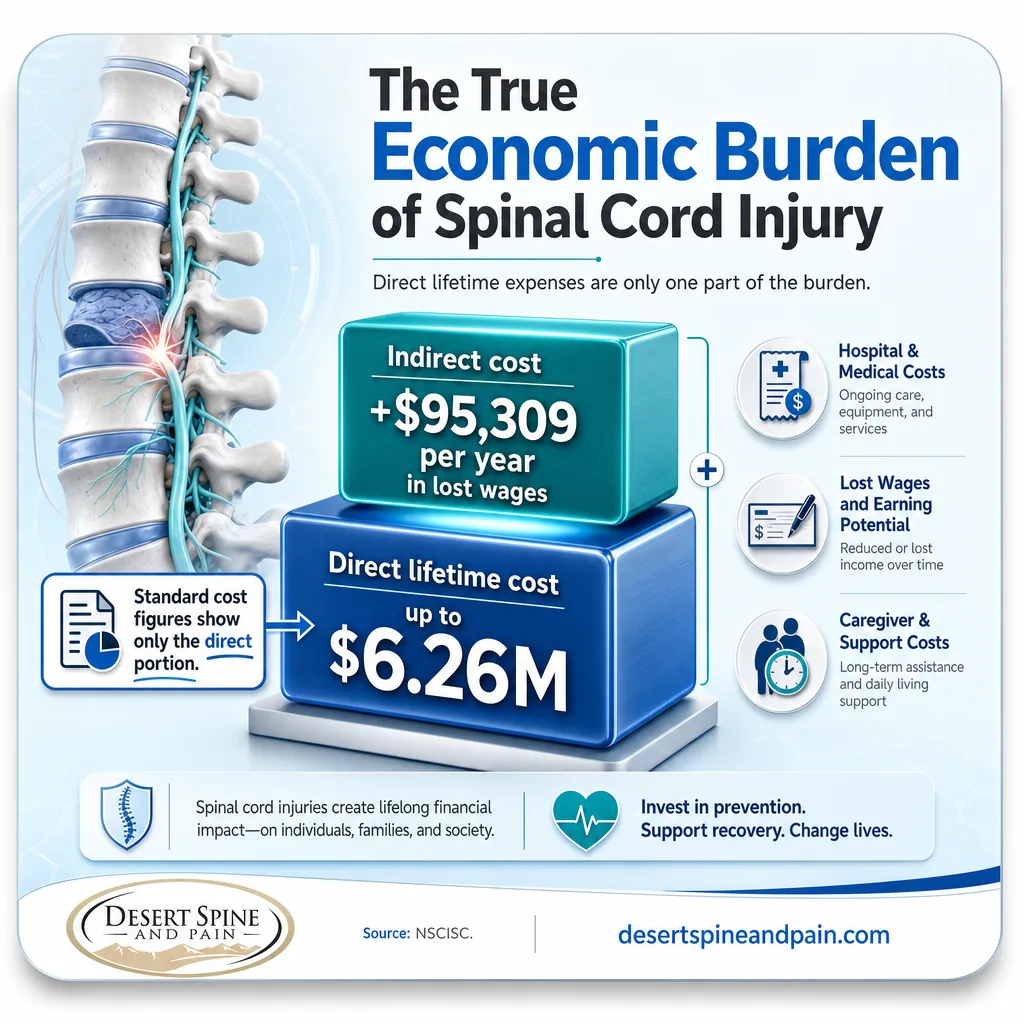
Myth: the lifetime cost figure is the total financial impact. It is not. The widely cited NSCISC lifetime costs cover direct medical and living expenses only. They exclude lost wages, benefits, and productivity, which average $95,309 per year. For a young person injured in their prime working years, adding indirect costs can push the true total far above the direct-cost figure, sometimes by millions.
Combining a multi-million-dollar direct cost with decades of lost earnings shows why spinal cord injury ranks among the most financially devastating events a person can experience, and why accurate accounting matters so much for both families and legal claims. For the indirect side in detail, see our data on lost wages and lost earning capacity.
Source: National Spinal Cord Injury Statistical Center
See employment impact dataWhat This Means for a Claim
In personal injury cases, lifetime cost estimates are often the backbone of the damages calculation, and getting them right depends on accurate medical evidence.
For personal injury attorneys: A credible lifetime cost projection starts with a sound medical foundation, the injury's severity, level, prognosis, and expected complications, which drive every cost line in a life care plan. Desert Spine and Pain partners with attorneys and their clients through the full arc of spine care, with fast response, coordination of documentation, and evaluation by a board-certified spine surgeon and neurosurgeon whose assessment carries weight. When a claim must account for decades of future cost, expert medical involvement early strengthens both the care and the record.
Whether the goal is planning for a family's future or valuing a claim, the lesson from the data is the same: spinal cord injury costs are enormous, lifelong, and highly dependent on severity and age, which makes precise, evidence-based assessment essential.
Source: SCI Cost Calculator study, PMC
Partner with us on a spine caseFull Statistics Table
| Statistic | Figure | Source | Year |
|---|---|---|---|
| Lifetime cost, high tetraplegia at 25 | $6,256,937 | NSCISC | 2026 |
| Lifetime cost, low tetraplegia at 25 | $4,571,708 | NSCISC | 2026 |
| Lifetime cost, paraplegia at 25 | $3,059,615 | NSCISC | 2026 |
| Lifetime cost, motor functional at 25 | $2,090,344 | NSCISC | 2026 |
| Lifetime cost, high tetraplegia at 50 (approx) | ~$2.5–3.6 million | NSCISC (approx) | 2026 |
| Lifetime cost, paraplegia at 50 (approx) | ~$1.5–2.3 million | NSCISC (approx) | 2026 |
| First-year cost, high tetraplegia | $1,410,163 | NSCISC | 2026 |
| First-year cost, low tetraplegia | $1,018,966 | NSCISC | 2026 |
| First-year cost, paraplegia | $687,262 | NSCISC | 2026 |
| First-year cost, motor functional | $460,224 | NSCISC | 2026 |
| Recurring cost, high tetraplegia | $244,879 | NSCISC | 2026 |
| Recurring cost, paraplegia | $91,042 | NSCISC | 2026 |
| Recurring cost, motor functional | $55,900 | NSCISC | 2026 |
| Average annual indirect cost (excluded) | $95,309 | NSCISC | 2026 |
| Life expectancy, paraplegia at 20 | +40.7 years | UAB / Statista | 2024 |
| Life expectancy, high tetraplegia at 20 | +28.7 years | UAB / Statista | 2024 |
| Healthcare cost inflation rate | ~5%+ per year | Life care planning | 2026 |
Frequently Asked Questions
How much does a spinal cord injury cost over a lifetime?
What is the first-year cost of a spinal cord injury?
Why does age at injury affect lifetime cost?
Do lifetime cost estimates include lost wages?
What is the most expensive type of spinal cord injury?
Methodology & Sources
Lifetime, first-year, and recurring cost figures by severity and age come from the National Spinal Cord Injury Statistical Center (NSCISC) Traumatic Spinal Cord Injury Facts and Figures at a Glance data sheet, expressed in 2024 dollars and reflecting direct costs, medical care and living expenses, only. These figures are corroborated by UAB data reported via Statista, which independently confirms lifetime costs of just over three million dollars for paraplegia and over six million for high tetraplegia at age 25, along with the life-expectancy figures. The average annual indirect cost of $95,309 comes from the same NSCISC data sheet and is excluded from the direct-cost totals. The healthcare cost inflation observation and equipment cost ranges come from published life care planning analyses. Additional context on cost-estimation methods comes from a 2026 peer-reviewed cost-calculator study published in PubMed Central. Cost figures are population averages; individual costs vary with complications, care intensity, and other factors. This article is informational and is neither individual medical nor legal advice; anyone dealing with a spinal cord injury should seek qualified medical and, where relevant, legal counsel.
Media and press: Journalists and researchers are welcome to cite these statistics with attribution to the original primary sources named above, and to Desert Spine and Pain for any analysis labeled as original.