
Who Is Not a Candidate for Artificial Disc Replacement?
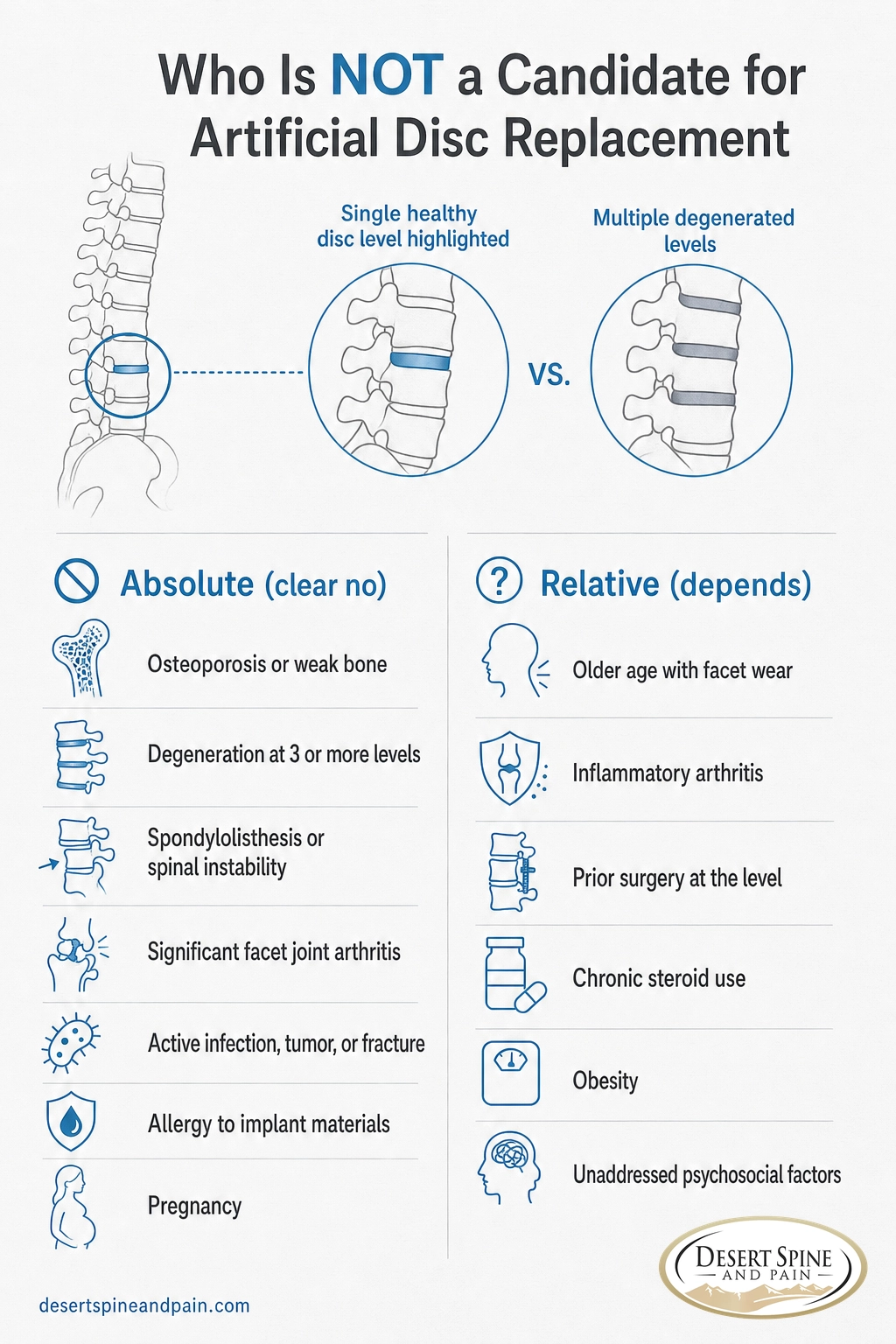
Who is not a candidate for artificial disc replacement? A patient is generally not a candidate if they have osteoporosis, degeneration at more than the approved number of levels, spinal instability, significant facet joint arthritis, active infection, a spinal tumor or fracture, or an allergy to the implant materials. Candidacy is confirmed only by a surgeon's review of your imaging and health history.
Artificial disc replacement can be an excellent operation, but only for a narrow group of carefully selected patients. The honest answer most people are looking for is not "how great is the surgery" but "will it work for me?" For many patients with back or neck pain, the structure of their spine, the quality of their bone, or the pattern of their disease means a motion-preserving disc would fail or even cause harm. Knowing the disqualifiers early saves you time, money, and a surgery that was never going to help.
- The single most consistent disqualifier is disease beyond the approved number of levels. Artificial discs are designed for one, or in select cases two, degenerated levels.
- Weak bone ends the conversation. Osteoporosis and osteopenia are listed contraindications because the implant cannot be anchored safely.
- Instability, spondylolisthesis, significant facet arthritis, infection, tumor, fracture, and implant allergy are all absolute reasons to choose a different plan.
- In one published series of cervical spine-surgery patients, 57 percent had at least one absolute contraindication to disc replacement, so being turned down is common, not a personal failing.
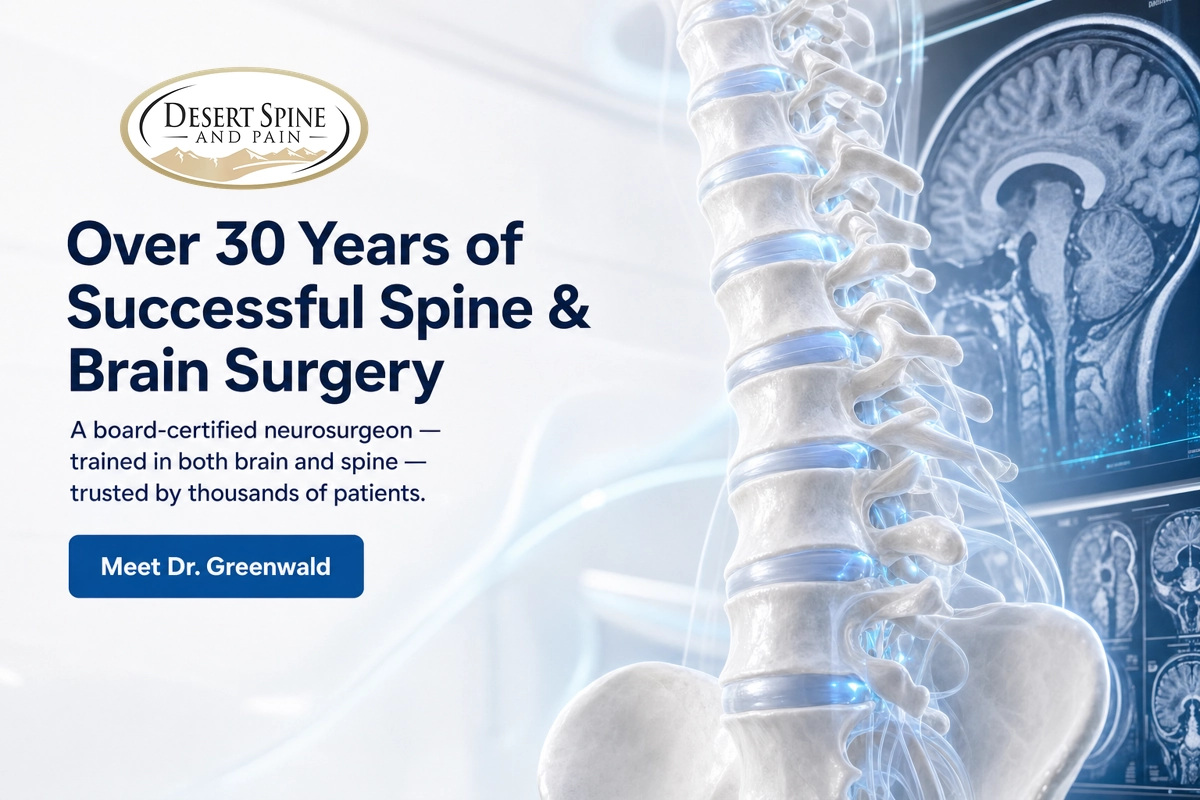
- Not a candidate does not mean no options. Spinal fusion, minimally invasive surgery, and continued non-surgical care are all on the table.
What's in This Guide
- Candidate vs. not a candidate at a glance
- Absolute contraindications: the clear no
- Relative contraindications: the depends
- Why bone quality is the deal-breaker
- Disc replacement vs. fusion: the confusion to clear up
- What to do if you are not a candidate
- How candidacy is actually determined
- Common questions
- Related terms
Candidate vs. Not a Candidate at a Glance
Artificial disc replacement, also called total disc replacement or disc arthroplasty, swaps a worn, pain-generating disc for a mechanical implant that preserves motion at that level. It was built for a specific problem: discogenic pain from a healthy-enough spine at one or two levels. The further your situation drifts from that narrow target, the less likely a disc is the right answer.
Here is the simplest way to see the divide. The left column describes the patient the device was designed for. The right column describes the features that move you out of the candidate pool.
| Points toward candidacy | Points away from candidacy |
|---|---|
| Pain from one, or select two, degenerated discs | Degeneration at three or more levels |
| Healthy, strong vertebral bone | Osteoporosis or osteopenia |
| A stable spine with aligned vertebrae | Spondylolisthesis or instability |
| Facet joints in good condition | Significant facet joint arthritis |
| Mainly disc-generated pain | Bony stenosis needing posterior decompression |
| Failed six or more months of conservative care | Active infection, tumor, or fracture at the level |
| Skeletally mature, otherwise healthy | Implant-material allergy or pregnancy |
Being turned down is far more common than most patients expect. When one research group applied published device-trial criteria to 167 consecutive cervical spine-surgery patients, a majority did not qualify.
Source: Auerbach et al., The Spine Journal (PubMed)
Absolute Contraindications: The Clear No
Absolute contraindications are the features that take disc replacement off the table regardless of how much you want it. They are drawn from the FDA labeling of the implants themselves and from the clinical criteria surgeons use every day. If any one of these is present at the level in question, the answer is almost always a different operation.
Multilevel disc disease
This is the most consistent disqualifier of all. Artificial discs are approved for a limited number of levels, and the mechanics of the implant depend on healthy neighbors above and below. When degeneration is spread across three or more levels, a single motion-preserving disc cannot solve the problem, and replacing several discs is not an approved or reliable solution.
Spinal instability and spondylolisthesis
A disc implant preserves motion. If your spine is already moving too much, more motion is exactly the wrong goal. Spondylolisthesis, where one vertebra slips forward on another, and any traumatic or degenerative instability call for stabilization, which is what a spinal fusion provides. Most lumbar disc labeling permits no more than Grade I slippage at the treated level.
Significant facet joint arthritis
Each spinal segment has a disc in the front and a pair of facet joints in the back. An artificial disc replaces only the front. If arthritic facet joints are a major pain source, restoring disc motion can actually aggravate them, so worn facets routinely steer patients toward fusion instead.
Weak or diseased bone
The implant has to lock into living vertebral bone and stay put for decades. Osteoporosis, osteopenia, and vertebrae compromised by prior fracture or disease cannot provide that foundation, which is why bone quality gets its own section below.
Infection, tumor, and fracture
An active local or systemic infection, a tumor involving the spine, or a vertebral fracture at the level all rule out disc replacement. Placing a permanent implant into infected, cancerous, or broken bone is unsafe and would compromise the result.
Implant-material allergy and pregnancy
The devices are made from metals such as cobalt-chromium or titanium and a plastic bearing surface. A documented allergy or sensitivity to those materials is a contraindication. Pregnancy also defers the procedure.
Wrong pain pattern
Isolated nerve-root compression without genuine discogenic pain is a mismatch for the device. If a pinched nerve, not the disc itself, is driving the symptoms, a targeted decompression procedure addresses the real problem.
Myth: "If I just find the right surgeon, anyone can get a disc replacement." Not true. These contraindications come from the FDA labeling of the devices and the biology of the spine, not from a surgeon's preference. A surgeon who offers you a disc implant despite osteoporosis or multilevel instability is ignoring the very conditions the device was tested under. The right surgeon is the one who tells you when it is not safe.
Source: FDA PMA device labeling summary (accessdata.fda.gov)
Relative Contraindications: The Depends
Relative contraindications do not automatically disqualify you, but they stack up. Each one lowers the odds that a disc replacement is the safest, most durable choice, and several together usually tip the decision toward another approach.
- Age and facet wear. Candidacy is less about a birthday than about what the imaging shows. Older patients more often have facet arthritis, bone thinning, and multilevel changes, which is why age indirectly narrows the pool.
- Inflammatory arthritis. Conditions such as ankylosing spondylitis or rheumatoid arthritis change how the spine fuses and moves and often make motion preservation unpredictable.
- Prior surgery at the level. A previous fusion or significant scarring at the target level complicates implanting a disc there.
- Chronic steroid use and some metabolic conditions. These can weaken bone and impair healing.
- Obesity. Very high body weight raises surgical risk and the mechanical load on the implant.
- Unaddressed psychosocial factors. Untreated depression, unrealistic expectations, or an active workers' compensation dispute can undercut recovery and are weighed before any elective spine surgery.
None of these is a verdict on its own. The point of a thorough evaluation is to weigh them together rather than in isolation.
Why Bone Quality Is the Deal-Breaker
Of all the disqualifiers, weak bone is the one patients least expect and surgeons take most seriously. An artificial disc is a load-bearing implant. It presses against the flat top and bottom surfaces of the vertebrae, called the endplates, and relies on strong bone to hold its position. In osteoporotic bone, the implant can sink into the vertebra, a problem called subsidence, or the bone can fracture around it. Either failure undoes the benefit and can make the pain worse.
That is why osteoporosis and osteopenia appear on the contraindication list in FDA device labeling, and why many device and insurer criteria set a concrete threshold.
A bone density scan is simple, quick, and often decisive. If a scan shows your bone is too thin to anchor an implant, that is not a setback so much as a safeguard, and it redirects the plan toward an option that does not depend on bone strength the same way.
Source: FDA PMA device labeling summary (accessdata.fda.gov)
Disc Replacement vs. Fusion: The Confusion to Clear Up
The term patients most often confuse with disc replacement is spinal fusion, and the difference explains most candidacy decisions. Both operations remove the damaged disc. The difference is what goes in its place and what happens to motion at that level.
| Feature | Artificial disc replacement | Spinal fusion |
|---|---|---|
| Goal | Preserve motion at the level | Stabilize by joining vertebrae |
| Best for | Disc pain, stable spine, strong bone, one or two levels | Instability, deformity, multilevel disease, facet arthritis |
| Handles weak bone? | No, bone must anchor the implant | Better tolerated |
| Handles instability? | No, motion is the goal | Yes, that is the purpose |
| Adjacent levels | May reduce added stress on neighbors | Can shift stress to neighboring levels over time |
Read down the "best for" row and the candidacy logic becomes obvious. The very features that disqualify you from a disc, including instability, multilevel disease, facet arthritis, and weak bone, are the features fusion was built to handle. Being told you need a fusion instead of a disc is not a downgrade. It is a match between your anatomy and the right tool. For a fuller picture of when stabilization is the better path, see our guide on why you might need spinal fusion surgery.
What to Do If You Are Not a Candidate
Hearing that you are not a candidate for a disc replacement can feel like a door closing. It is not. It means the plan shifts to an option better matched to your spine. There are three broad paths, and most patients have more than one open to them.
Spinal fusion or stabilization
If instability, multilevel disease, or facet arthritis took disc replacement off the table, a fusion is usually the direct answer. Modern minimally invasive techniques have made fusion far less daunting than the open operations of the past, with smaller incisions and faster recovery.
Targeted non-fusion surgery
Not every disqualified patient needs a fusion. If a pinched nerve or focal stenosis is the real driver, a focused decompression such as a microdiscectomy or laminectomy can relieve symptoms while leaving the rest of the spine alone.
Continued non-surgical care
Many patients who are not surgical candidates do best by optimizing conservative care first, including targeted injections, image-guided nerve blocks, and a structured rehabilitation plan. Treating osteoporosis can also change the picture over time.
The goal is never a particular procedure. It is relief that lasts, achieved with the least invasive approach that will actually work. Explore the full range of options on the spine surgery overview.
How Candidacy Is Actually Determined
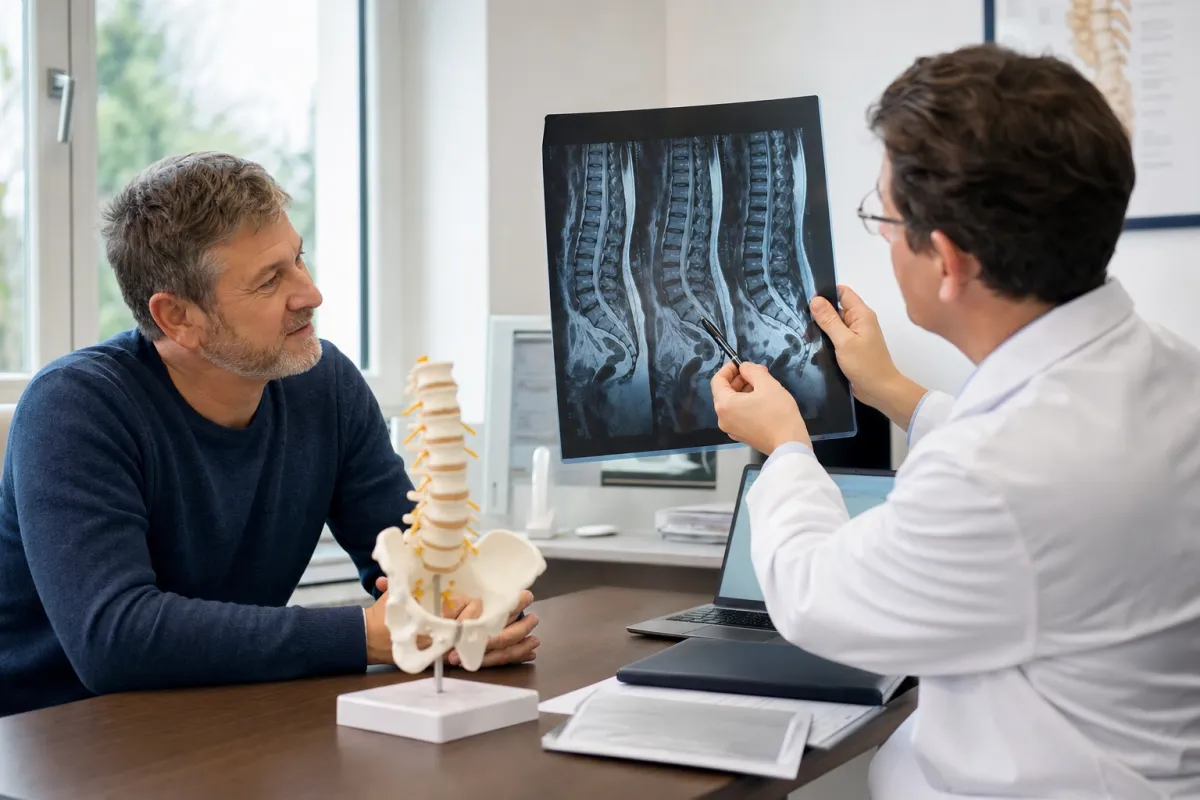
No checklist replaces a real evaluation. Candidacy for disc replacement is decided by matching your specific imaging and health history against the criteria above, and that is a judgment only an experienced spine surgeon can make well. A thorough workup typically includes an MRI to see the discs and nerves, dynamic X-rays to test for instability, and a bone density scan when bone quality is in question.
This is also where a surgeon's depth matters. At Desert Spine and Pain in Phoenix, evaluations are led by Dr. David L. Greenwald, MD, FACS, a board-certified surgeon who is both a spine surgeon and a neurosurgeon. That dual training means your candidacy is weighed by someone who understands both the mechanics of the spine and the neurology of the nerves it protects, and who follows a least-invasive-effective-treatment-first philosophy rather than reaching for the biggest operation.
If you have been told you are not a candidate, or you just want a clear answer about your own spine, a focused consultation will tell you where you stand and what your best path forward is.
Learn about artificial disc replacement at Desert Spine and Pain
Book a consultation to find out if you qualify
Source: FDA PMA device labeling summary (accessdata.fda.gov)
Common Questions About Artificial Disc Replacement Candidacy
Who is not a candidate for artificial disc replacement?
Does osteoporosis disqualify you from disc replacement?
Can you get an artificial disc if you have spinal arthritis?
Why would a surgeon recommend fusion instead of a disc replacement?
Can you have an artificial disc at more than one level?
Related Terms
- Artificial disc replacement: replacing a worn disc with a motion-preserving implant. See our artificial disc replacement page.
- Cervical disc replacement: disc arthroplasty in the neck, often approved for one or two levels. See cervical disc replacement.
- Lumbar disc replacement: disc arthroplasty in the low back. See lumbar disc replacement.
- Spinal fusion: joining two vertebrae to stabilize an unstable or multilevel segment. See spinal fusion.
- Spondylolisthesis: slippage of one vertebra over another, a common contraindication to disc replacement. See spine conditions.
- Facet joint arthritis: wear in the small joints at the back of each spinal segment that a disc implant does not treat.
- Osteoporosis: low bone density that prevents secure anchoring of a spinal implant.
- Adjacent segment disease: new degeneration at levels next to a treated segment, a factor in choosing disc replacement vs. fusion.
Methodology and Sources
This article summarizes published device labeling, peer-reviewed candidacy research, and standard clinical criteria for artificial disc replacement. It is educational and does not replace an individual evaluation. Candidacy can only be confirmed by a spine surgeon's review of your imaging and medical history.