
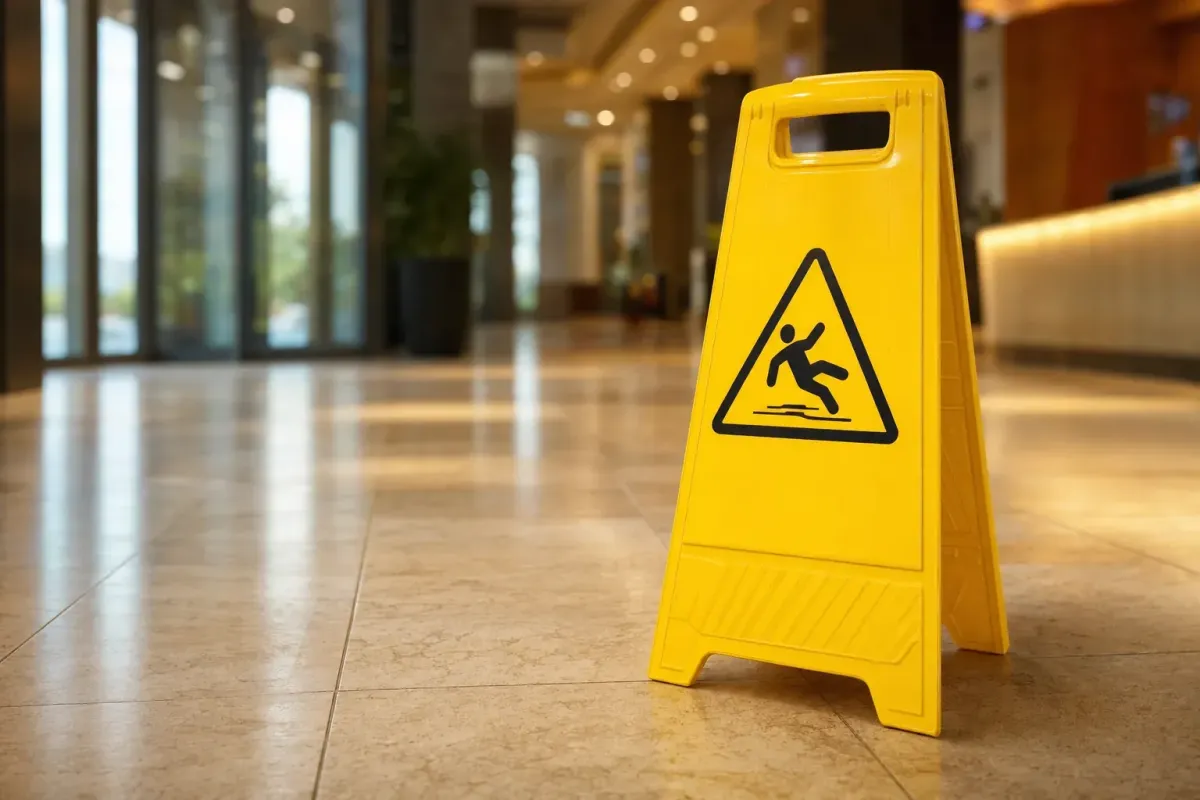
Slip and Fall Injury Statistics (2026): Frequency, Spine Risk, and Who's Most Vulnerable
Falls are the leading cause of non-fatal injuries in the United States, and for a spine practice they carry a specific significance: falls are the second leading cause of traumatic spinal cord injury, and the leading cause among older adults. This report breaks down how common slip and fall injuries are, the spine injuries they cause, and who is most at risk.
- Falls send roughly 8 to 9 million people to U.S. emergency rooms each year, the leading cause of non-fatal treated injuries.
- Slip and fall incidents specifically account for about a million ER visits a year and roughly 12 percent of all falls.
- Falls are the second leading cause of traumatic spinal cord injury (about 30 percent), behind motor vehicle crashes.
- Among adults over 65, falls are the number one cause of spinal cord injury and of injury-related death.
- One in three adults over 65 falls each year, and about half are repeat fallers.
- Falls commonly cause vertebral fractures, disc injuries, and soft tissue damage, especially when landing on the back.
What's in This Report
1 How Common Falls Are
Falls are so common that they top the list of non-fatal injuries in the country. The numbers are large, and it helps to separate falls in general from slip and fall incidents specifically.
Falls are the leading cause of non-fatal medically treated injuries in the United States, sending roughly 8 to 9 million people to emergency rooms each year across all fall types. Slip and fall incidents, the subset most relevant to premises liability, account for about a million of those ER visits annually and make up roughly 12 percent of all falls. Between 20 and 30 percent of people who fall sustain an injury, ranging from lacerations to hip fractures to spine and head trauma.
Source: National Safety Council fall injury data | Slip and fall ER-visit data
2 Falls and the Spine
For a spine practice, one statistic stands above the rest: falls are the second leading cause of traumatic spinal cord injury in the United States. Only motor vehicle crashes cause more.
Accidental falls account for nearly 30 percent of all traumatic spinal cord injuries, placing them second only to auto accidents. And the picture shifts dramatically with age. Among adults over 65, falls become the leading cause of spinal cord injury, overtaking crashes. Research has also documented a significant rise in fall-related spinal cord injuries over the past several decades, driven in part by an aging population. The mechanism is direct: when a person lands on their back, the spine bears the concentrated force of the impact.
This connects directly to our detailed report on crash spinal injury data, where crashes rank first; falls are the close second in that same causation picture.
Source: National Institute of Disability and Rehabilitation SCI causation | NCBI fall-related SCI trend
3 The Spine Injuries Falls Cause
A fall can injure the spine in several distinct ways, and the severity spans from a manageable strain to a catastrophic, life-altering injury. Understanding the range helps explain why every hard fall on the back deserves attention.
The most common spine injuries from falls mirror those from other trauma, but with a distinct tilt toward fractures in older adults. Vertebral fractures occur when the fall places immense pressure on the spinal column, and these can require extensive treatment or surgery. Disc injuries, including herniation, can result from the sudden loading. Soft tissue injuries to the muscles and ligaments of the back are common. And at the most severe end, spinal cord damage can occur, potentially causing lasting disability. Landing on debris or an object raises the danger further, because the force concentrates at a single point rather than distributing across the back.
- Vertebral fractures: compression and other fractures, especially in older adults with lower bone density.
- Disc injuries: herniated or bulging discs from sudden axial loading.
- Soft tissue injuries: strains and sprains of back muscles and ligaments.
- Spinal cord injury: the most severe, ranging from bruising to permanent damage.
See the spine conditions we treat after a fall
Source: Back injuries in slip and fall accidents | Slip and fall spine injury mechanism
4 Why Older Adults Are Most at Risk
No group is more affected by falls than older adults, and the data on this is stark. The combination of higher fall frequency and greater fragility makes falls a defining health risk after 65.
About one in three adults over 65 falls each year, and roughly half of those are repeat fallers. Falls are the leading cause of injury-related death in this age group, and the most common cause of traumatic brain injury. The reasons a fall is more dangerous with age are physiological: bone density declines, often to the point of osteoporosis, so vertebrae fracture more easily, and age-related changes in the spine leave less margin. Older patients also tend to experience more life-threatening complications, longer hospital stays, and higher costs after a fall. Sobering context: deaths from falls among adults 65 and older have risen sharply in recent decades.
The opposite is often true. Because of reduced bone density and spinal changes, a fall that a younger person would shrug off can cause a vertebral compression fracture in an older adult. These fractures are sometimes missed initially and can cause lasting pain and deformity if untreated. For anyone over 65, a fall onto the back or that causes new back pain deserves prompt evaluation, not a wait-and-see approach.
Source: CDC older-adult fall data | Older-adult fall complications
5 The Delayed-Symptom Danger
One of the most important and least understood facts about fall injuries is that they do not always announce themselves immediately. This delay is where preventable harm often happens.
Spine and head injuries from falls frequently have delayed symptoms. A vertebral fracture or disc injury may not be obvious in the first hours, and the pain can build over the following days. Traumatic brain injury is even more insidious: after hitting the head, a person may feel only a mild headache at first, with more serious symptoms appearing hours or even a day or two later. The instinct to assume that being able to move means nothing is broken is understandable but mistaken. This is precisely why prompt evaluation after a hard fall is a sound decision even when the person feels relatively fine.
Two trends compound each other. The share of the U.S. population over 65 is rising, and falls are both more frequent and more damaging in that group, already the leading cause of spinal cord injury after 65. As the population ages, fall-related spine injuries are positioned to grow as a share of all spine trauma, which is consistent with the documented multi-decade rise in fall-related spinal cord injuries. The practical implication is that fall evaluation, especially for older adults with new back pain, will only become more important.
Calculation and interpretation original to Desert Spine and Pain.
Source: Delayed-onset fall injury symptoms
6 Premises Liability and What to Do
For the personal injury attorneys whose clients make up much of any spine practice's caseload, slip and fall injuries fall under premises liability, a different legal framework from motor vehicle crashes but one where the medical evidence is just as decisive.
Premises liability claims turn on whether a property owner failed to maintain reasonably safe conditions, a wet floor without a warning sign, an unlit stairway, an uneven walkway. But whatever the liability facts, the value and validity of a claim rest heavily on the medical picture: what was injured, how badly, and whether the fall caused it. As with crash injuries, the frequent delayed onset of spine symptoms makes early, well-documented evaluation important both for the patient's recovery and for the record. Spinal cord injuries in particular carry enormous costs, frequently exceeding a million dollars in the first year alone, which raises the stakes for accurate diagnosis.
How Desert Spine and Pain fits in
Desert Spine and Pain is led by Dr. David L. Greenwald, a board-certified surgeon who is both a spine surgeon and a neurosurgeon. That dual expertise spans exactly the injuries falls produce, from vertebral fractures to disc injuries to spinal cord damage. The practice pursues the least invasive effective treatment first and reserves surgery for cases that require it. For personal injury attorneys across the Phoenix area handling premises liability cases, it offers 24/7 concierge coordination, fast response, and the thorough documentation their clients' claims depend on.
Book a consultation or connect our team with your attorney
Source: Slip, trip, and fall claim data
7 Summary Data Table
| Statistic | Figure | Source | Year |
|---|---|---|---|
| ER visits per year from falls (all types) | 8-9 million | National Safety Council | 2023 |
| ER visits per year from slip and fall | ~1 million | NFSI / clinical | Cited |
| Slip and fall share of all falls | ~12% | NFSI | Cited |
| Falls resulting in injury | 20-30% | National Safety Council | Cited |
| Falls as share of traumatic SCI | ~30% | NIDR | Cited |
| Falls rank among SCI causes | 2nd (1st for 65+) | NIDR / NSCISC | Cited |
| Adults over 65 who fall each year | 1 in 3 | CDC | 2025 |
| Repeat fallers among those who fall | ~50% | CDC | Cited |
| Falls as injury-death cause for 65+ | Leading cause | CDC | 2025 |
| Falls resulting in fracture | ~5% | Clinical data | Cited |
| Rise in fall deaths among 65+ | +41% (recent decades) | CDC | Cited |
| SCI treatment cost, first year | $1 million+ | Clinical cost data | Cited |
| Falls as cause of TBI | Most common cause | National Safety Council | Cited |
| Non-fatal fall injury annual cost (U.S.) | ~$50 billion | NCBI | Cited |
| Primary premises liability injury category | Falls | OSHA / NSC | 2026 |
Frequently Asked Questions
How common are slip and fall injuries?
Can a slip and fall cause a spinal injury?
Who is most at risk of a serious fall injury?
Why should I see a doctor after a fall even if I feel okay?
How expensive is a spinal cord injury from a fall?
All figures trace to their most authoritative available source. Fall frequency, ER-visit totals, injury rates, and older-adult data are drawn from the National Safety Council, the Centers for Disease Control and Prevention, the National Floor Safety Institute, and OSHA, as compiled in current injury analyses. Spinal cord injury causation is from the National Institute of Disability and Rehabilitation and consistent with National Spinal Cord Injury Statistical Center rankings. Because sources report fall data across different definitions, this report distinguishes all falls from slip and fall incidents specifically, and presents ranges where figures vary. SCI cost figures reflect clinical cost literature. Where Desert Spine and Pain interprets demographic trends, that analysis is labeled as original.
This report touches on serious injury among older adults. Anyone concerned about a fall or fall risk should consult a qualified physician.