
Minimally Invasive Spine Surgery Statistics (2026): Adoption, Outcomes, and Recovery
Minimally invasive spine surgery has moved from novelty to norm, now accounting for over 70 percent of spinal procedures in the United States by industry analysis. For suitable patients, the peer-reviewed data favors it: significantly less blood loss, shorter hospital stays, fewer complications, and lower cost, with disability outcomes equivalent to open surgery.
- Minimally invasive techniques now account for over 70 percent of U.S. spinal procedures, a roughly 25 percent increase since 2015.
- A 53-study meta-analysis of degenerative lumbar surgery found MIS significantly reduced hospital stay, blood loss, complications, and cost, with equivalent disability scores.
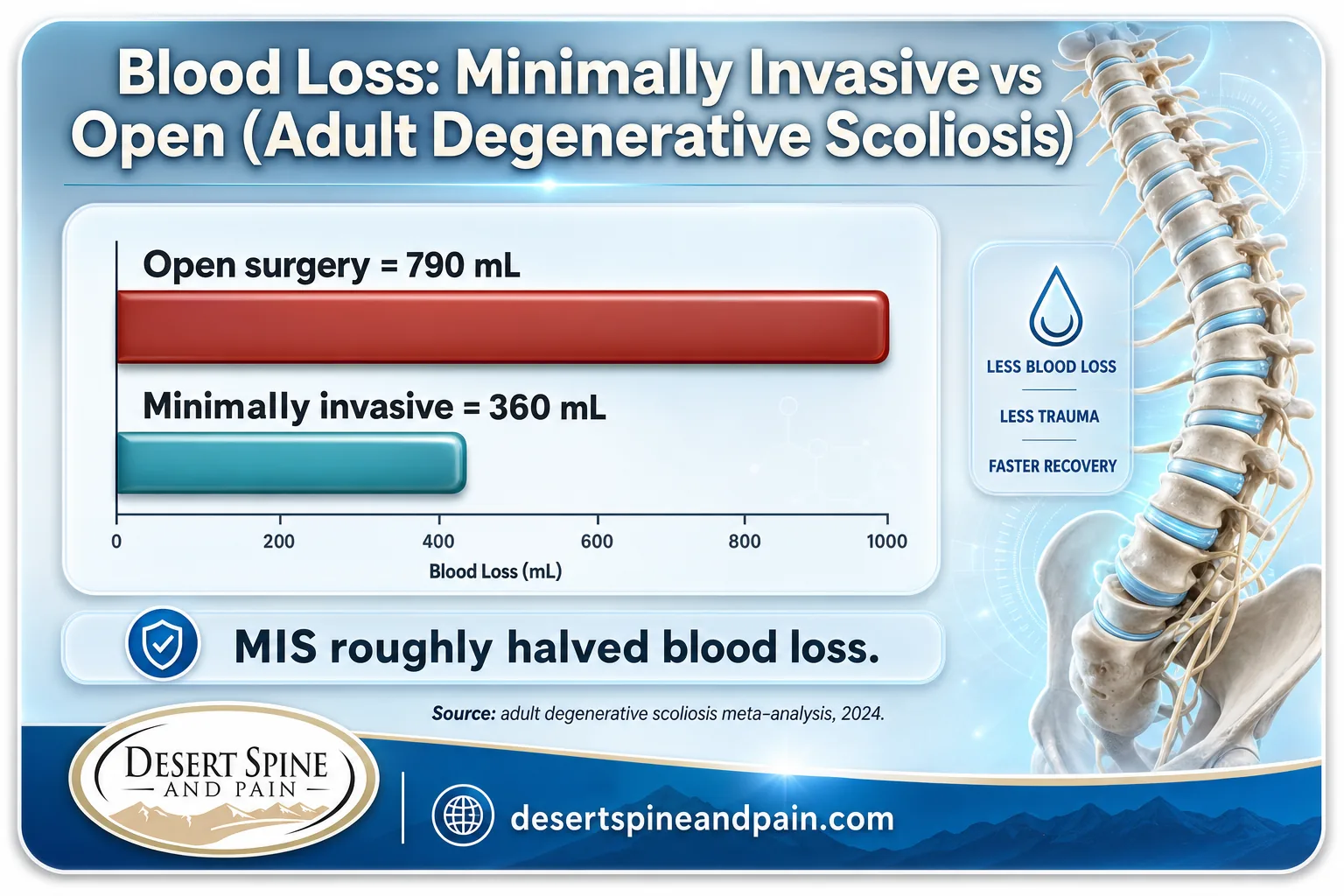
- In an adult degenerative scoliosis meta-analysis of 1,527 patients, blood loss averaged 360 mL for MIS versus 790 mL for open, and reoperation was 14 percent versus 28 percent.
- In a spine metastases meta-analysis, MIS cut blood loss by about 600 mL and shortened stay by roughly 4.6 days.
- Globally, minimally invasive procedures reached about 46 percent of total spine surgeries in 2025, with outpatient procedures near 41 percent.
- Radiographic fusion rates were statistically similar between MIS and open in scoliosis data (80.5 vs 91.1 percent, not significant), so MIS trades nothing essential for its recovery benefits in suitable cases.
- Not every case qualifies; complex deformities may still need open surgery, so diagnosis drives the approach.
What's in This Guide
1Adoption: How Common MIS Has Become
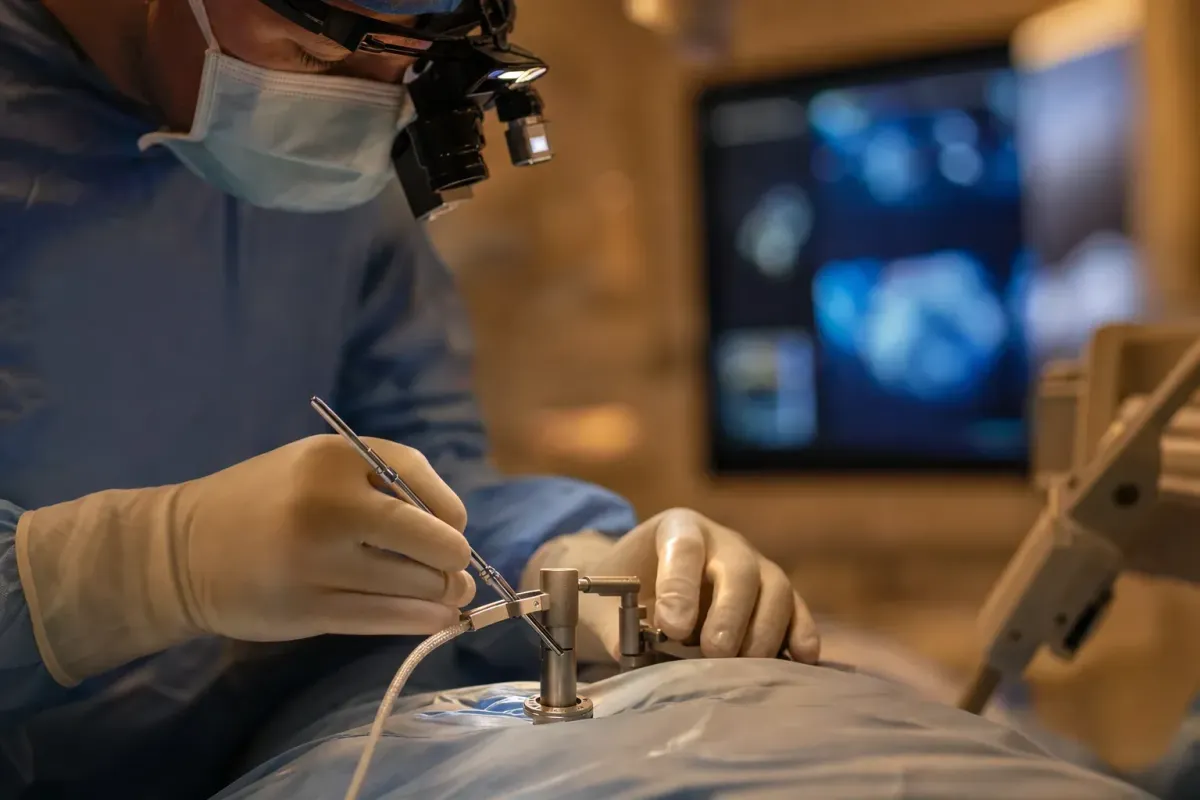
Minimally invasive spine surgery uses small incisions, tubular retractors, and advanced imaging to reach the spine with less disruption to muscle and tissue than traditional open surgery. Over the past decade it has shifted from a specialized option to the default for many procedures.
The U.S. leads global adoption, and the trend continues upward as surgeons, patients, and payers all favor approaches that shorten recovery and reduce complications. Our Phoenix practice, led by board-certified neurosurgeon and spine surgeon Dr. David L. Greenwald, MD, FACS, treats minimally invasive surgery as a first-choice option whenever it can achieve the same goals as open surgery.
Explore minimally invasive spine surgery in PhoenixSource: Technavio MIS market analysis
2MIS vs Open: The Outcome Data
The central question for any patient is whether minimally invasive surgery actually delivers better results. The strongest evidence comes from meta-analyses that pool many studies, and the pattern is consistent.
The takeaway from the degenerative lumbar meta-analysis is important: minimally invasive surgery matched open surgery on the outcomes that measure whether patients got better (disability scores), while beating it on the outcomes that measure how hard the recovery was (blood loss, hospital stay, complications, cost). In suitable patients, that is a favorable trade with little downside.
Combining the European Spine Journal finding (equivalent disability outcomes) with the scoliosis fusion data (80.5 vs 91.1 percent fusion, not statistically significant) shows that for appropriately selected patients, minimally invasive surgery reaches the same clinical destination as open surgery while reducing blood loss, hospital time, and complications. The recovery advantage does not come at the cost of the result. Interpretation original to Desert Spine and Pain.
Source: European Spine Journal meta-analysis | MIS vs open literature review, 2025
3Blood Loss, Hospital Stay, and Recovery
The recovery advantages of minimally invasive surgery are where the data is most striking, because these differences are measured directly in the operating room and on the ward.
Average Blood Loss, MIS vs Open (Adult Degenerative Scoliosis)
MIS roughly halved blood loss in this meta-analysis. Source: adult degenerative scoliosis meta-analysis, 2024.
Less blood loss and shorter hospitalization translate into real benefits: lower transfusion risk, faster mobilization, and a quicker return to daily life. For patients balancing recovery against work and family, and for personal injury clients whose recovery timeline affects their case, these differences matter.
Source: Journal of Neurosurgery: Spine, 2024
4Complications and Reoperation
Fewer complications is one of the most consistent findings across minimally invasive spine research, though it is not absolute and depends on the procedure and surgeon experience.
A 10-year PRISMA review of minimally invasive complications confirmed the benefits of reduced tissue injury, blood loss, and hospital stay, while noting that MIS carries its own learning curve and technique-specific complications. This is the crucial nuance: minimally invasive surgery is safer in experienced hands, and the surgeon's proficiency is part of the outcome.

Minimally invasive does not mean minor. These procedures are technically demanding and carry a real learning curve. The complication advantages seen in the literature reflect skilled surgeons using advanced navigation and microsurgical technique. In less experienced hands, the small-incision approach can introduce its own risks. The technology lowers risk only when paired with expertise, which is why who performs the surgery matters as much as which approach is used.
Source: e-Neurospine PRISMA complications review, 2024 | Degenerative lumbar MIS meta-analysis, PMC
5Market Growth and Technology
The minimally invasive spine field is expanding steadily, propelled by navigation, robotics, and better implants. Market data helps frame how quickly the approach is scaling.
The direction is clear: the field is shifting from open to minimally invasive formats, with navigation and robotics accelerating that migration. Dr. Greenwald uses precision tools, navigation systems, and microsurgical techniques to deliver minimally invasive care, including minimally invasive fusion and decompression, matching the technology to each patient.
Desert Spine and Pain works with out-of-network patients of every kind and partners closely with personal injury attorneys, offering 24/7 concierge response and documentation coordination for their clients and their operations.
Review the conditions we treatSource: MIS market analysis, 2025 | Future Market Insights, 2026
Summary Table: MIS Statistics 2026
| Statistic | Figure | Source | Year |
|---|---|---|---|
| MIS share of U.S. spinal procedures | 70%+ | Technavio | 2024 |
| Increase in MIS adoption since 2015 | ~25% | Technavio | 2024 |
| MIS share of global spine surgeries | 46% | MIS market analysis | 2025 |
| Outpatient share of spine procedures | 41% | MIS market analysis | 2024 |
| Studies in degenerative lumbar meta-analysis | 53 | European Spine Journal | 2022 |
| Blood loss, MIS vs open (scoliosis) | 360 vs 790 mL | ADS meta-analysis | 2024 |
| Reoperation, MIS vs open (scoliosis) | 14% vs 28% | ADS meta-analysis | 2024 |
| Fusion rate, MIS vs open (scoliosis) | 80.5% vs 91.1% | ADS meta-analysis (n.s.) | 2024 |
| Blood loss reduction (spine metastases) | ~600 mL | J Neurosurg Spine | 2024 |
| Length-of-stay reduction (spine metastases) | ~4.6 days | J Neurosurg Spine | 2024 |
| Hospital stay reduction (market est.) | 38% | MIS market analysis | 2024 |
| Complication reduction (market est.) | 27% | MIS market analysis | 2025 |
| Robotic-assisted adoption | 29% | MIS market analysis | 2023 |
| Navigation system integration | 33% | MIS market analysis | 2023 |
| MIS spine surgery market value | ~$7 billion | MIS market analysis | 2025 |
| Implants / instrumentation market share | 64% | MIS market analysis | 2024 |
Frequently Asked Questions
How common is minimally invasive spine surgery?
Is minimally invasive spine surgery better than open surgery?
How much less blood loss does minimally invasive spine surgery involve?
Does minimally invasive spine surgery have a lower reoperation rate?
How big is the minimally invasive spine surgery market?
Methodology & Sources
How we compiled these statistics
Clinical figures (blood loss, hospital stay, complications, reoperation, fusion rate) trace to Tier 1 peer-reviewed meta-analyses. Adoption and market figures come from established industry analyses and are labeled as such; market estimates vary by scope and definition, so we present ranges and attribute each figure. All statistics describe populations, not any individual patient, and clinical benefits apply to appropriately selected candidates.
Primary sources referenced:
- European Spine Journal, minimally invasive versus open surgery for degenerative lumbar pathologies (53-study meta-analysis)
- Journal of Neurosurgery: Spine, perioperative outcomes of MIS vs open for spine metastases meta-analysis, 2024
- Adult degenerative scoliosis MIS vs open meta-analysis (1,527 patients), 2024, via literature review
- e-Neurospine, 10-year PRISMA review of MIS complications, 2024
- Technavio minimally invasive spine surgery market analysis (adoption data)
- Additional MIS market analyses for adoption, outpatient, robotics, and navigation figures
This article is educational and is not individual medical advice. Minimally invasive surgery is not appropriate for every patient or condition. For guidance specific to your spine, consult a qualified spine surgeon. No outcome can be guaranteed.
Journalists and researchers may cite these statistics with attribution to Desert Spine and Pain and a link to this page. Please attribute the underlying figures to their original Tier 1 sources as listed above. For expert commentary on minimally invasive spine surgery from a board-certified neurosurgeon and spine surgeon, contact Desert Spine and Pain at (602) 566-9500.